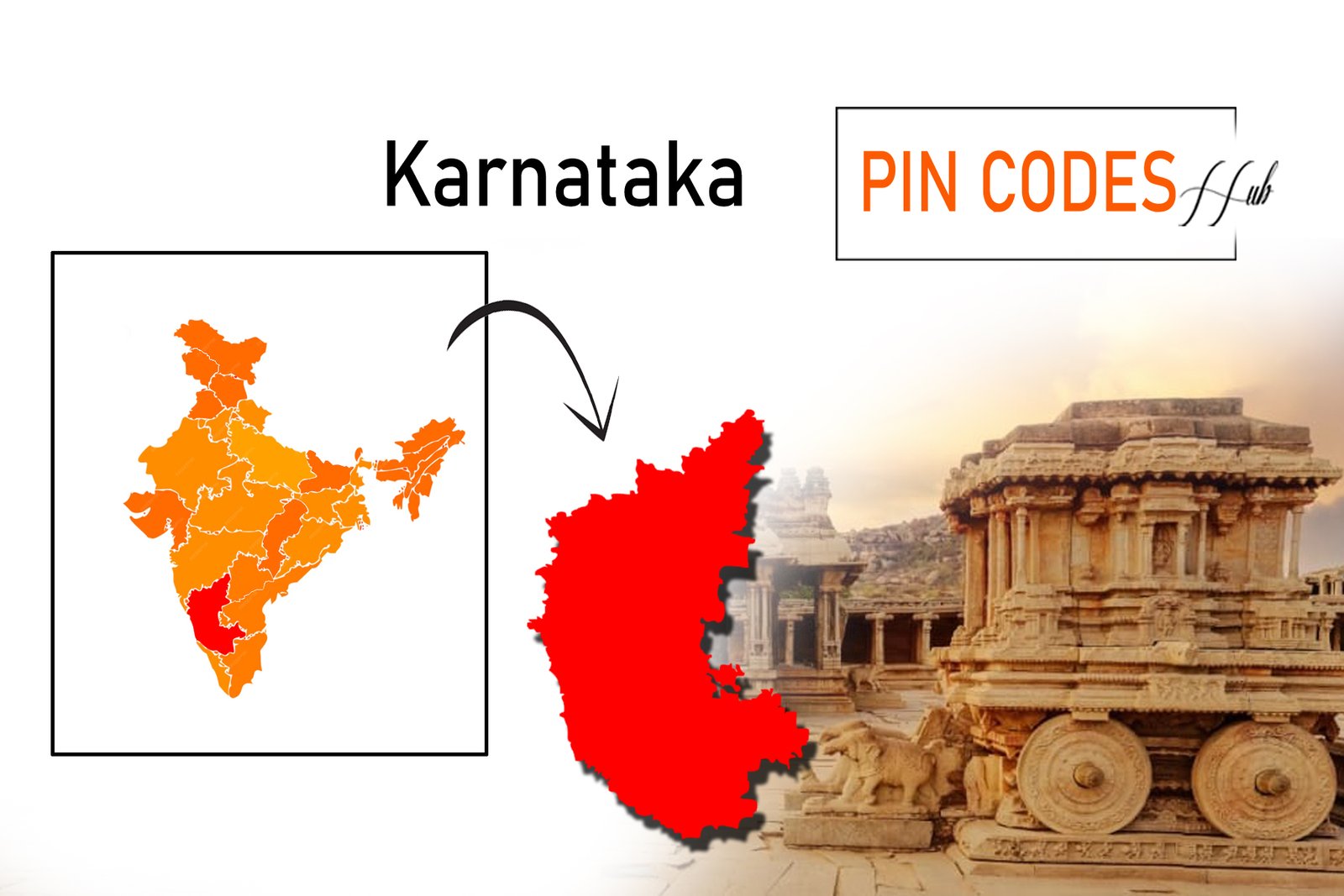
Complete Karnataka PIN codes Guide:
Karnataka PIN codes one of the most developed and diverse states of India, has a well-structured postal system that plays a crucial role in communication, trade, and administration. The PIN code system in Karnataka helps ensure that letters, parcels, and official documents reach the correct destination efficiently, even in remote villages or densely populated cities.
Introduction to Karnataka PIN codes System
Karnataka PIN codes stands for Postal Index Number. It is a six-digit number introduced by India Post in 1972 to simplify mail sorting and delivery. Each digit in the Karnataka PIN codes has a specific meaning. The first digit represents the postal zone, the second digit indicates the sub-zone, and the third digit identifies the sorting district. The last three digits denote the specific post office.
Karnataka falls under the southern postal zone, and its Karnataka PIN codes generally begin with the number 5. This makes it easier to identify that a particular address belongs to this region.
A typical Karnataka PIN codes ooks like this: 560001. Let us break it down:
- The first digit “5” represents the southern region of India.
- The second digit “6” identifies the sub-region within the southern zone.
- The third digit specifies the sorting district.
- The last three digits indicate the exact post office.

For example, 560001 is one of the most well-known Pincodes associated with Bengaluru, the capital city of Karnataka.
Karnataka PIN codes has a vast and efficient postal network that connects urban centers, towns, and rural areas. The state has thousands of post offices, including head post offices, sub post offices, and branch post offices. These are managed by India Post and provide services such as mail delivery, savings accounts, money transfers, and parcel services.
Major cities like Bengaluru, Mysuru, Mangaluru, Hubballi, and Belagavi have multiple Pincodes due to their large size and population. Each area within these cities has its own unique Karnataka PIN codes to ensure accurate delivery.
Karnataka is divided into several districts, and each district has a range of Karnataka PIN codes assigned to it. Some examples include:
- Bengaluru Urban: 560001 to 560100 (approximate range)
- Mysuru: 570001 onwards
- Dakshina Kannada (Mangaluru region): 575001 onwards
- Dharwad (Hubballi-Dharwad region): 580001 onwards
- Belagavi: 590001 onwards
Karnataka PIN codes:
| No. | District Name | Main / Starting PIN Code |
|---|---|---|
| 1 | Bagalkot | 587101 |
| 2 | Ballari (Bellary) | 583101 |
| 3 | Belagavi (Belgaum) | 590001 |
| 4 | Bengaluru Rural | 562110 |
| 5 | Bengaluru Urban | 560001 |
| 6 | Bidar | 585401 |
| 7 | Chamarajanagar | 571313 |
| 8 | Chikkaballapur | 562101 |
| 9 | Chikkamagaluru | 577101 |
| 10 | Chitradurga | 577501 |
| 11 | Dakshina Kannada | 575001 |
| 12 | Davanagere | 577001 |
| 13 | Dharwad | 580001 |
| 14 | Gadag | 582101 |
| 15 | Kalaburagi (Gulbarga) | 585101 |
| 16 | Hassan | 573201 |
| 17 | Haveri | 581110 |
| 18 | Kodagu | 571201 |
| 19 | Kolar | 563101 |
| 20 | Koppal | 583231 |
| 21 | Mandya | 571401 |
| 22 | Mysuru (Mysore) | 570001 |
| 23 | Raichur | 584101 |
| 24 | Ramanagara | 562159 |
| 25 | Shivamogga (Shimoga) | 577201 |
| 26 | Tumakuru | 572101 |
| 27 | Udupi | 576101 |
| 28 | Uttara Kannada | 581301 |
| 29 | Vijayapura (Bijapur) | 586101 |
| 30 | Yadgir | 585201 |
| 31 | Vijayanagara | 583201 |
These ranges are not fixed strictly but give a general idea of how Pincodes are distributed geographically.
Karnataka PIN codes are extremely important for multiple reasons:
- Efficient Mail Delivery
They eliminate confusion caused by similar place names. For example, there may be villages with the same name in different districts, but their PIN codes make them unique. - Time-saving
Automated sorting systems use PIN codes to quickly route mail to the correct destination. - E-commerce Growth
With the rise of online shopping, PIN codes help companies deliver products accurately. Many e-commerce platforms check service availability based on PIN codes. - Government Services
Various government schemes and official communications depend on correct PIN code usage.
Karnataka PIN codes reflects its balanced development. Urban areas like Bengaluru have densely packed PIN codes because of high population and infrastructure. On the other hand, rural areas have fewer post offices, and one Karnataka PIN codes may cover multiple villages.
Despite this difference, India Post ensures that even the remotest regions of Karnataka are connected. This is especially important in areas like the Western Ghats and northern dry zones, where accessibility can be challenging.
- IT Hub Influence: Bengaluru, known as the Silicon Valley of India, has a large number of PIN codes due to rapid urban expansion and corporate presence.
- Tourism Support: Tourist destinations like Mysuru and coastal regions use PIN codes extensively for hotel bookings and travel services.
- Industrial Areas: Cities like Hubballi and Belagavi have industrial zones with dedicated PIN codes for factories and warehouses.
While the Karnataka PIN codes is highly efficient, there are some challenges:
- Rapid urbanization sometimes leads to delays in assigning new PIN codes.
- Rural areas may still face delays due to geographical barriers.
- Incorrect or missing Pincodes can lead to delivery failures.
However, India Post continues to modernize its services by introducing digital tools and tracking systems.
With the growth of digital services, Pincodes are now used beyond postal delivery. They are essential for:
- Online registrations
- Address verification
- Banking and financial services
- Location-based services
In Karnataka, especially in cities like Bengaluru,Pincodes are integrated into almost every digital platform.
The PIN code system in Karnataka is a vital part of its infrastructure. It connects people, businesses, and government institutions across the state. From the busy streets of Bengaluru to the quiet villages of rural districts, Pincodes ensure that communication remains smooth and reliable.
As Karnataka continues to grow economically and technologically, the importance of an organized postal system will only increase. The Pincodes system, managed efficiently by India Post, stands as a backbone of this connectivity, making everyday life easier for millions of people.
FAQ’s of Karnataka PIN codes
About State of Karnataka PIN codes :
Karnataka PIN codes Karnataka is one of the most diverse and culturally rich states in southern India. It lies between the Arabian Sea on the west and the Deccan Plateau on the east, giving it a unique combination of coastal beauty, fertile plains, and hilly landscapes. The state is known for its balanced mix of tradition and modern development, where ancient heritage exists alongside growing cities and industries.
The history of Karnataka PIN codes s long and layered, shaped by many powerful dynasties over centuries. Early kingdoms laid the foundation for art, architecture, and administration, while later rulers contributed to literature, music, and temple construction. The remains of old empires can still be seen in forts, temples, and ruins scattered across the state. These historical structures reflect the skills and creativity of people who lived long ago and continue to attract visitors even today.
Language plays an important role in Karnataka’s identity. Kannada is the official language and is widely spoken across the state. It has a rich literary tradition, with poetry, stories, and philosophical writings that date back many centuries. Apart from Kannada, several other languages are also spoken due to the state’s diverse population. This linguistic variety adds to the cultural richness and helps people from different backgrounds live together harmoniously.
Karnataka is also known for its strong cultural traditions. Music, dance, and theatre are deeply rooted in daily life. Classical music has flourished here for generations, and folk traditions continue to be performed in villages and towns. Dance forms are expressive and often tell stories from mythology or daily life. Festivals are celebrated with great enthusiasm, bringing people together regardless of differences. These celebrations often include music, food, decorations, and rituals that have been passed down over generations.
The food of Karnataka reflects its regional diversity. Coastal areas are known for dishes made with coconut and seafood, while the interior regions focus more on grains, lentils, and vegetables. Meals are usually simple yet flavorful, often served on banana leaves in traditional settings. Each region has its own special recipes, which are influenced by local climate and available ingredients. Food is not just about eating but also about sharing and community bonding.
Agriculture remains an important part of life in many parts of Karnataka. Farmers grow a variety of crops including rice, millets, sugarcane, and spices. The state’s different climate zones allow for diverse agricultural practices. In some areas, irrigation supports farming, while in others, people depend on rainfall. Agriculture not only provides food but also supports rural livelihoods and traditions.
In recent years, Karnataka has also become known for its growth in technology and industry. Cities in the state have developed into major centers for education, innovation, and business. Many young people from across the country come here to study or work, contributing to the state’s dynamic environment. This growth has brought new opportunities but also challenges such as urban expansion and the need for sustainable development.
Nature is another important aspect of Karnataka. The state has forests, rivers, hills, and wildlife that support a wide range of plant and animal species. Some areas are protected to conserve biodiversity and maintain ecological balance. These natural spaces offer peace and beauty, attracting those who enjoy outdoor activities and wildlife observation. Protecting these environments is essential for future generations.
Education is given importance in Karnataka, with schools and colleges spread across urban and rural areas. The state has made efforts to improve literacy and provide access to learning opportunities. Students pursue studies in various fields, from arts and science to engineering and medicine. Education is seen as a path to personal growth and social progress.
The people of Karnataka are known for their warmth and hospitality. Despite differences in language, religion, and culture, there is a strong sense of unity. Traditions are respected, but there is also openness to new ideas and ways of living. This balance between old and new makes the state unique and adaptable.
Transport and connectivity have improved over time, linking different parts of the state more effectively. Roads, railways, and other means of travel help people move for work, education, and trade. Better connectivity also supports tourism, allowing visitors to explore various regions easily.
Karnataka’s economy is a blend of agriculture, industry, and services. While farming supports rural areas, industries and businesses contribute to economic growth. Small-scale enterprises and traditional crafts also play a role in providing employment. Handicrafts, textiles, and local art forms are valued both within and outside the state.
Tourism is another growing sector in Karnataka. People visit for its historical sites, natural beauty, cultural experiences, and spiritual places. Each region offers something different, whether it is a quiet village, a busy town, or a scenic landscape. Tourism not only brings income but also encourages the preservation of heritage and culture.
However, like many developing regions, Karnataka faces challenges. Issues such as water management, urban congestion, and environmental protection require careful planning and action. Balancing growth with sustainability is important to ensure that progress does not harm natural resources or traditional ways of life.
In conclusion, Karnataka is a state that reflects both depth and diversity. Its history, culture, language, and natural beauty create a strong foundation, while its modern growth shows its potential for the future. The people, traditions, and changing landscape together form a unique identity that continues to evolve. Karnataka stands as an example of how tradition and progress can exist side by side, offering lessons in balance, resilience, and cultural richness.
Over view of Karnataka PIN codes:
Karnataka PIN codes hat reflects balance—between tradition and progress, nature and industry, simplicity and ambition. From its coastal regions to its hill ranges and dry plains, the state shows how geography can shape culture, livelihoods, and communication systems. One of the most practical yet often overlooked parts of this system is the PIN code network, which quietly supports everyday life across the state.
The Karnataka PIN codes system in Karnataka is more than just a set of numbers. It represents organization, accessibility, and connectivity. Each code is carefully assigned to ensure that even the smallest village can be reached without confusion. Whether it is a remote area in the Western Ghats or a busy locality in a major city like Bangalore, the presence of a unique PIN code helps in smooth delivery of letters, parcels, and essential services. It reduces errors, saves time, and makes communication reliable.
What makes Karnataka PIN codessystem meaningful is how it adapts to diversity. The state has districts with very different characteristics—some are highly urbanized with dense populations, while others are spread out with limited infrastructure. Despite these differences, the postal network manages to serve all areas with efficiency. This shows a strong administrative structure and careful planning behind the scenes.
Another important aspect is how PIN codes contribute to development. In today’s world, where online shopping, banking, and government services depend on accurate location details, PIN codes play a key role. In Karnataka PIN codes, they help businesses reach customers, allow people to access services from their homes, and support economic activity even in less developed regions. In many ways, they act as a bridge between rural and urban life.
Karnataka’s growth in technology and industry also increases the importance of a well-functioning postal system. As cities expand and new areas develop, the PIN code system evolves to include these changes. This ensures that the state remains connected internally while also staying linked to the rest of the country.
In conclusion, Karnataka is not just defined by its culture, history, or economy, but also by the systems that keep it running smoothly. The Karnataka PIN codes network is one such system that works silently but effectively. It connects people, supports services, and strengthens communication across the state. Together, Karnataka PIN codes present a picture of a well-organized and forward-moving region where even the smallest detail contributes to the larger goal of connectivity and growth.