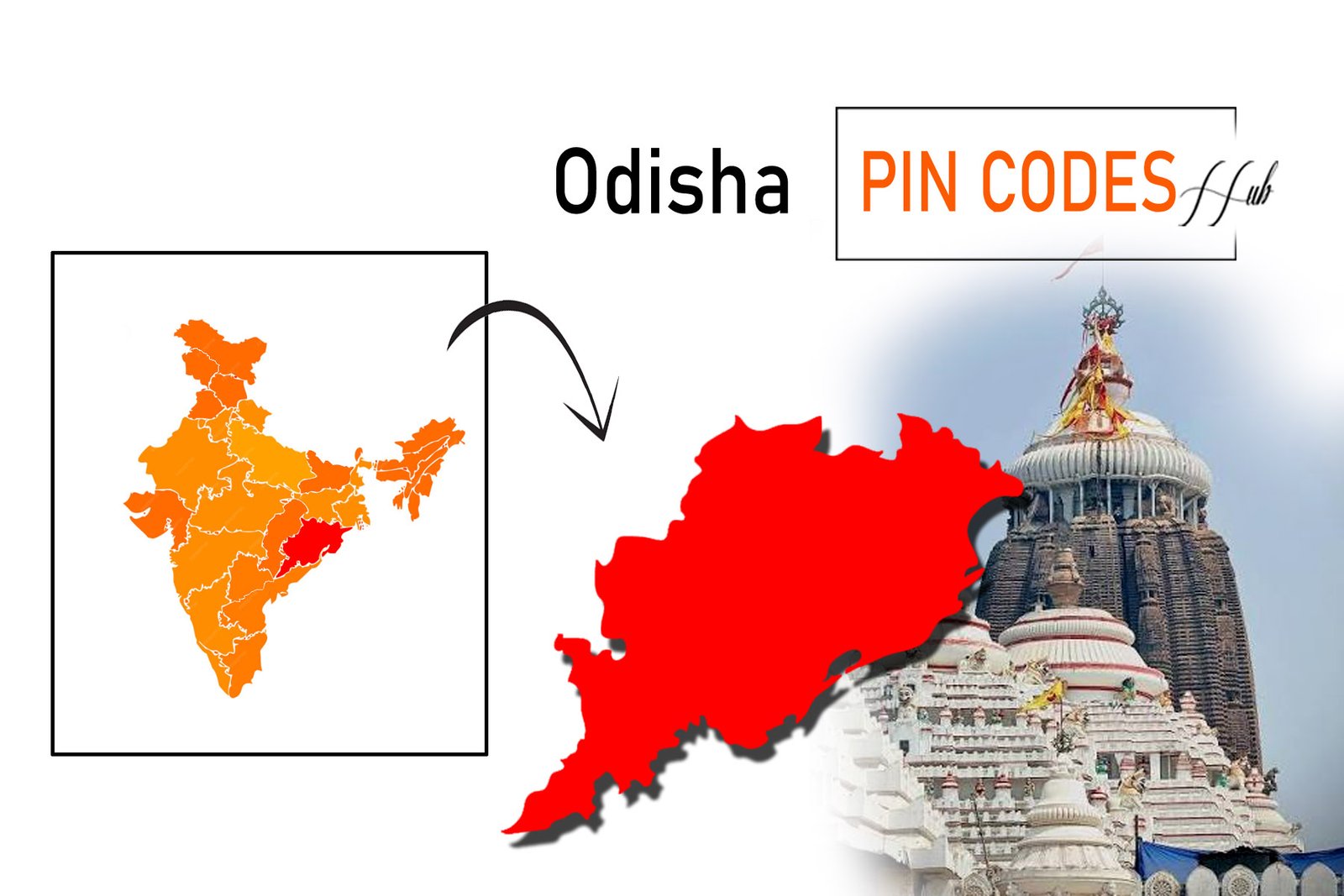
Complete Guide to Odisha PIN Codes:
Odisha is states in India that don’t try too hard to stand out but still leave a strong impression, and Odisha is one of them. Sitting along the eastern coast, it carries a mix of old traditions, natural beauty, and steady development. People often talk about its temples, beaches, and festivals, but there is something else quietly holding everything together—the postal system, especially the PIN codes.
At first glance, a PIN code feels like just another small detail at the end of an address. Most people don’t pay attention to it unless they are filling out a form or ordering something online. But if you pause for a moment and think about it, these six digits play a surprisingly important role. They help organize locations, guide deliveries, and make sure that things reach exactly where they are supposed to go.
In a state like Odisha, this becomes even more meaningful. The state has a wide range of landscapes—coastal areas, rivers, forests, and interior villages. Some places are busy and crowded, while others are quiet and far from the main roads. Without a clear system to identify each location, delivering anything accurately would become difficult. That’s where PIN codes come in. They quietly bring order to all this diversity.

A Simple Way to Understand PIN Codes
The PIN code system in India was introduced to make mail delivery easier and more reliable. Before it existed, there were often delays and confusion, especially when places had similar names. With PIN codes, every location could be identified clearly.
Each PIN code has six digits, and each part has a purpose. In Odisha, most PIN codes begin with 7, which represents the eastern region of the country. The next digits narrow things down further—from region to district and finally to the exact post office.
You can think of it like a map in numbers. Instead of writing long directions, these digits tell the system exactly where something needs to go. Even if the address is not perfectly written, the PIN code often helps correct the path.
For someone working in the postal system, this makes a big difference. It reduces confusion and speeds up the process. For ordinary people, it simply means that their letters, parcels, and documents reach them without unnecessary delays.
Daily Life and the Importance of PIN Codes
Many people don’t realize how often they use PIN codes in daily life. It’s not just about sending letters anymore. Today, PIN codes are part of many small but important activities:
- Ordering products online
- Filling out bank forms
- Applying for government schemes
- Registering for exams or schools
- Receiving official documents
In Odisha, where some areas are still developing and others are quite remote, the PIN code becomes a reliable way to ensure that services reach everyone.
Imagine someone living in a small village far from the city. Without a clear identification system, it would be difficult for delivery services or government offices to reach them. But with a PIN code, that village becomes part of a larger network. It is recognized, organized, and connected.
How Odisha Is Structured Through Its Districts
Odisha is divided into many districts, and each one has its own identity. Some are known for cities and industries, while others are known for agriculture or natural beauty. The postal system follows this structure, with each district having its own set of PIN codes.
Khordha District
This district is home to Bhubaneswar, the capital of Odisha. Being an administrative and growing urban center, Bhubaneswar has a wide network of post offices. The PIN codes here are spread across different areas, covering residential zones, offices, and commercial spaces.
Because of the fast-paced life in the city, accurate delivery becomes important. PIN codes help manage this flow smoothly.
Cuttack District
Cuttack has a different feel compared to Bhubaneswar. It carries a sense of history and tradition. The postal system here has been in place for a long time, adapting as the city has grown.
PIN codes in this district help connect both old neighborhoods and newer developments.
Puri District
Puri is well known for its cultural and religious importance. Throughout the year, people travel here for various reasons. The postal system plays a role in supporting communication not just for residents but also for visitors.
Ganjam District
Ganjam is a large district with a mix of urban and rural life. Some areas are busy, while others are quieter. The PIN code system helps maintain a balance, ensuring that both types of areas are equally connected.
Balasore District
Balasore lies along the coast and has both industrial and agricultural importance. The postal network here supports local businesses as well as everyday communication.
Sambalpur District
Sambalpur is known for its culture and gradual development. The postal system connects nearby towns and villages, helping maintain steady communication.
Mayurbhanj District
This is one of the larger districts and includes forest areas and tribal communities. In such regions, the PIN code system becomes very important because it helps reach places that are otherwise difficult to access.
Koraput District
Koraput has a landscape filled with hills and greenery. Villages are spread out, and distances can feel longer. Here, PIN codes help organize deliveries and make sure nothing gets lost along the way.
Sundargarh District
Sundargarh is known for its industries and natural resources. The postal system supports both business and residential needs.
Other Districts
Districts like Kendrapara, Jagatsinghpur, Rayagada, and others each have their own set of PIN codes. These codes help manage communication within their regions and connect them to the rest of the state.
Odisha district PIN codes
| S.No | District | PIN Code Range |
|---|---|---|
| 1 | Angul | 759100 – 759149 |
| 2 | Balangir | 767001 – 767065 |
| 3 | Baleswar (Balasore) | 756001 – 756100 |
| 4 | Bargarh | 768028 – 768052 |
| 5 | Bhadrak | 756100 – 756181 |
| 6 | Boudh | 762010 – 762026 |
| 7 | Cuttack | 753001 – 754037 |
| 8 | Deogarh | 768108 – 768121 |
| 9 | Dhenkanal | 759001 – 759027 |
| 10 | Gajapati | 761200 – 761215 |
| 11 | Ganjam | 760001 – 761140 |
| 12 | Jagatsinghapur | 754101 – 754142 |
| 13 | Jajpur | 755001 – 755026 |
| 14 | Jharsuguda | 768201 – 768226 |
| 15 | Kalahandi | 766001 – 766110 |
| 16 | Kandhamal | 762001 – 762110 |
| 17 | Kendrapara | 754211 – 754292 |
| 18 | Kendujhar (Keonjhar) | 758001 – 758085 |
| 19 | Khordha | 751001 – 752057 |
| 20 | Koraput | 764001 – 764087 |
| 21 | Malkangiri | 764045 – 764087 |
| 22 | Mayurbhanj | 757001 – 757107 |
| 23 | Nabarangpur | 764059 – 764078 |
| 24 | Nayagarh | 752069 – 752094 |
| 25 | Nuapada | 766105 – 766118 |
| 26 | Puri | 752001 – 752114 |
| 27 | Rayagada | 765001 – 765033 |
| 28 | Sambalpur | 768001 – 768200 |
| 29 | Subarnapur (Sonepur) | 767017 – 767045 |
| 30 | Sundargarh | 769001 – 770076 |
Frequently Asked Questions (FAQs)
1. Why do most PIN codes in Odisha start with 75 or 76?
If you look closely, you’ll notice a pattern. Most PIN codes in Odisha begin with 75 or 76 because these numbers are assigned to the eastern region of India. It’s actually helpful—once you see these digits, you can quickly guess that the address belongs somewhere in Odisha.
2. Can different places in Odisha have the same PIN code?
Yes, this happens quite often. In many cases, a single post office handles multiple nearby villages or areas. So even if the place names are different, they might still share the same PIN code. It doesn’t create much confusion because the full address still guides the delivery.
3. Is it really necessary to write the PIN code correctly?
Yes, it matters more than people think. Even if the address is written properly, the PIN code helps speed up the sorting process. If it’s wrong, the parcel might get delayed or sent to the wrong location before being corrected.
4. Do small villages in Odisha also have PIN codes?
Yes, almost every area is covered. Even if a village doesn’t have its own post office, it is usually linked to a nearby one and shares its PIN code. This ensures that even remote places stay connected.
5. How do I find the correct PIN code for my area?
Most people check it online or ask at the nearest post office. In many cases, locals already know their area’s PIN code because they use it regularly for forms and deliveries.
6. What happens if I forget to write the PIN code?
Sometimes the parcel still reaches the destination if the address is clear, but it can take longer. The PIN code helps speed things up, so it’s always better to include it.
7. Are PIN codes only used for postal services?
Not anymore. These days, PIN codes are used in many places—online shopping, banking, job applications, and even mobile app registrations. They have become a basic part of identification.
8. Why are PIN codes important for online shopping in Odisha?
When you order something online, the system checks your PIN code to see if delivery is possible in your area. It also helps estimate delivery time. Without it, many services wouldn’t work properly.
9. Can a PIN code change over time?
It doesn’t happen often, but in some cases—like when new post offices are opened or areas are reorganized—changes can happen. Usually, people are informed when that happens.
10. Are PIN codes different for cities and villages?
Yes, cities usually have more PIN codes because they are larger and more crowded. Villages may have fewer codes, often shared across nearby areas.
Postal Services Beyond Letters
In earlier times, post offices were mainly used for sending letters. But today, their role has expanded.
In Odisha, especially in rural areas, post offices provide services like:
- Savings accounts
- Money transfers
- Insurance services
- Government scheme distribution
For many people, the post office is not just a place for mail—it is a part of their daily life. The PIN code system helps organize these services so that they reach the right people.
The Role of PIN Codes in Online Shopping
With the growth of online shopping, PIN codes have become even more important. When someone orders something online, the system first checks whether delivery is available in that area. This is done using the PIN code.
In Odisha, this has made life easier for many people. Even those living in smaller towns can now access products from different parts of the country.
The PIN code helps companies:
- Identify delivery locations
- Plan delivery routes
- Estimate time and cost
Without it, managing deliveries across such a diverse state would be very difficult.
Challenges in a State Like Odisha
Odisha faces certain natural and geographical challenges. Cyclones, heavy rains, and floods are not uncommon, especially in coastal areas. Some regions are also difficult to access due to forests or lack of proper roads.
In such conditions, delivering mail or parcels can become challenging. But the PIN code system helps reduce confusion. Even if delays happen due to weather, the destination remains clear.
This reliability is what keeps the system strong.
A Quiet but Strong System
One interesting thing about PIN codes is that they don’t demand attention. People rarely think about them unless something goes wrong. But when everything works smoothly, it is because the system is doing its job well.
In Odisha, this system has slowly grown stronger over time. It has adapted to changes, supported new services, and continued to connect people across different regions.
Odisha Conclusion
The PIN code system in Odisha may seem simple, but it carries a deeper importance. It connects cities, towns, and villages in a way that is both organized and reliable. From places like Bhubaneswar to remote interior regions, every area is part of the same network.
It helps in communication, supports services, and ensures that no place is left out. Even with challenges like weather and geography, the system continues to work quietly and effectively.
In the end, these six-digit numbers are more than just codes. They represent connection, accessibility, and a system that keeps everyday life running smoothly without asking for attention.