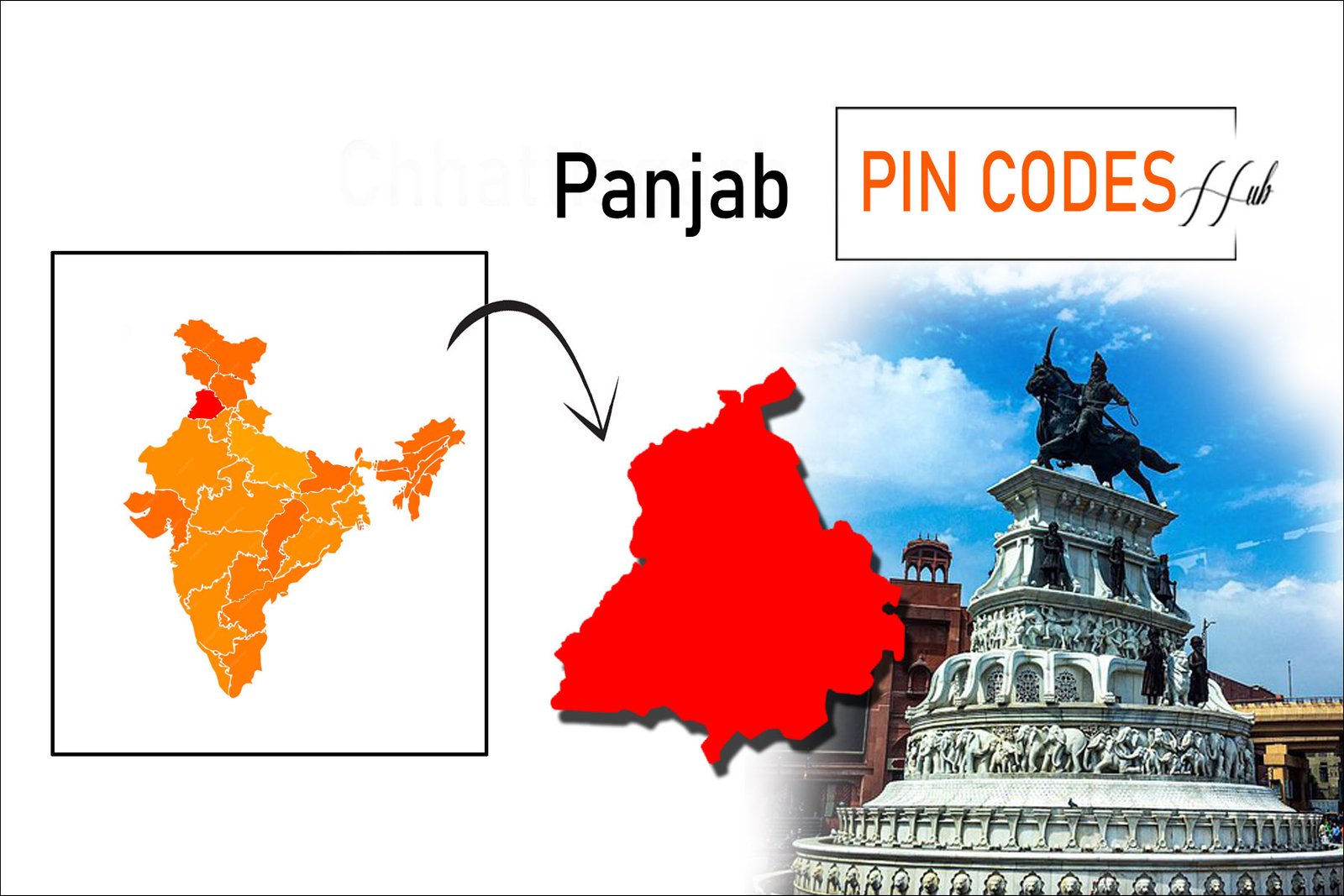
Complete Guide to Punjab PIN Codes:
Punjab is one of those states that carries a strong identity without needing to explain itself too much. The moment you hear the name, a few things naturally come to mind—fields stretching far into the distance, the warmth of its people, and a rhythm of life that feels both energetic and grounded. Located in the northern part of India, Punjab has always been known for its agriculture, culture, and resilience. But beyond all the visible aspects, there is a quiet system that keeps everything connected—the PIN code system.
Most people don’t give much attention to PIN codes. They quickly write them at the end of an address or type them into an online form without thinking twice. But if you pause and look a little closer, these six digits are doing a lot of work behind the scenes. They help organize places, guide deliveries, and make sure that communication reaches the right destination without confusion.
In a state like Punjab, where there is a mix of busy cities, growing towns, and peaceful villages, this system becomes even more meaningful. Every area has its own pace and character, and the PIN code helps bring all of them into a single organized network.

A Simple Way to Understand PIN Codes
The PIN code system in India was introduced to make the postal system more efficient. Before this system came into place, letters and parcels often got delayed or misplaced, especially when different places had similar names. With the introduction of PIN codes, each location was given a unique identity.
A PIN code has six digits, and each digit has a specific meaning. In Punjab, most PIN codes begin with 1, which represents the northern region of India. As the digits continue, they narrow down the location—from region to district, and finally to the specific post office.
You can think of it like a structured path. Instead of writing long descriptions or directions, these numbers guide the delivery step by step. Even if part of the address is unclear, the PIN code often helps correct the route.
For people working in the postal system, this reduces confusion and saves time. For everyone else, it simply ensures that their letters, parcels, and documents arrive without unnecessary delays.
Daily Life and the Importance of PIN Codes
In today’s world, PIN codes are used far beyond sending letters. They have quietly become part of everyday life in many ways. In Punjab, just like in other states, people rely on PIN codes for a variety of tasks:
- Ordering products online
- Filling out forms for banks or schools
- Applying for government schemes
- Receiving important documents
- Registering for exams or services
In cities like Ludhiana or Amritsar, where life moves quickly, PIN codes help manage the constant flow of deliveries. In villages and smaller towns, they ensure that services reach people without confusion.
Imagine someone living in a small village surrounded by fields. Without a clear system, it would be difficult for delivery services or government offices to locate that place. But with a PIN code, that village becomes part of a larger network. It is recognized, organized, and connected.
How Punjab Is Structured Through Its Districts
Punjab is divided into several districts, each with its own identity and characteristics. Some districts are known for industry, others for agriculture, and some for cultural importance. The postal system follows this structure closely, with each district having its own set of PIN codes.
Amritsar District
Amritsar holds deep cultural and historical importance. It attracts visitors from all over the country and beyond. Because of this, the postal network here is well-developed.
The PIN codes in this district cover both crowded city areas and quieter surrounding regions. They help manage the steady flow of communication and deliveries.
Ludhiana District
Ludhiana is one of the largest industrial hubs in Punjab. The city is always busy, with businesses, factories, and residential areas all growing together.
Here, PIN codes play a major role in keeping everything organized. With so many shipments and deliveries happening daily, accuracy becomes very important.
Jalandhar District
Jalandhar has a mix of tradition and modern development. It is known for education, sports goods, and a growing urban environment.
The postal system in this district connects old neighborhoods with new developments, and PIN codes help maintain that balance.
Patiala District
Patiala carries a royal touch, with a rich cultural background. At the same time, it is also developing steadily.
The PIN codes here cover a range of areas—from historic parts of the city to expanding residential zones.
Bathinda District
Bathinda is known for its agricultural importance as well as industrial growth. It represents a blend of rural and urban life.
The PIN code system ensures that both types of areas are equally connected, without any confusion.
Mohali (SAS Nagar) District
Mohali is one of the fastest-growing urban areas in Punjab. It has modern infrastructure, IT companies, and planned residential sectors.
Because of rapid development, the postal system here depends heavily on accurate PIN codes to manage deliveries efficiently.
Gurdaspur District
Gurdaspur has a quieter environment compared to larger cities. It includes both towns and villages, each with its own pace of life.
PIN codes help connect these areas smoothly, ensuring that communication reaches even the less crowded regions.
Hoshiarpur District
Hoshiarpur is known for its natural beauty and calm surroundings. Many areas here are less densely populated.
In such regions, the PIN code system becomes important because it helps identify locations clearly and avoid confusion.
Firozpur District
Firozpur lies near the border and has its own strategic importance. It includes both urban areas and rural landscapes.
The postal system here plays a steady role in maintaining communication, supported by well-structured PIN codes.
Other Districts
Punjab also includes districts like Moga, Faridkot, Barnala, Fazilka, Kapurthala, and others. Each district has its own set of PIN codes, helping organize communication within the region and connect it to the rest of the state.
Punjab District PIN Code Overview
| S.No | District | PIN Code Range |
|---|---|---|
| 1 | Amritsar | 143001 – 143606 |
| 2 | Barnala | 148101 – 148109 |
| 3 | Bathinda | 151001 – 151509 |
| 4 | Faridkot | 151201 – 151213 |
| 5 | Fatehgarh Sahib | 140406 – 147301 |
| 6 | Fazilka | 152123 – 152133 |
| 7 | Ferozepur | 152001 – 152024 |
| 8 | Gurdaspur | 143201 – 145029 |
| 9 | Hoshiarpur | 144201 – 146001 |
| 10 | Jalandhar | 144001 – 144630 |
| 11 | Kapurthala | 144601 – 144804 |
| 12 | Ludhiana | 141001 – 142055 |
| 13 | Mansa | 151501 – 151505 |
| 14 | Moga | 142001 – 142060 |
| 15 | Pathankot | 145001 – 145029 |
| 16 | Patiala | 147001 – 147105 |
| 17 | Rupnagar (Ropar) | 140001 – 140133 |
| 18 | Sahibzada Ajit Singh Nagar (Mohali) | 140301 – 140110 |
| 19 | Sangrur | 148001 – 148106 |
| 20 | Shahid Bhagat Singh Nagar (Nawanshahr) | 144514 – 144533 |
| 21 | Sri Muktsar Sahib | 152026 – 152116 |
| 22 | Tarn Taran | 143401 – 143422 |
Frequently Asked Questions (FAQs)
1. Why do most PIN codes in Punjab start with 14 or 15?
This is because Punjab falls under the northern postal region of India. The starting digits help identify the broader area quickly.
2. Can different places share the same PIN code?
Yes, especially in rural areas. A single post office may handle multiple nearby villages, so they share the same PIN code.
3. Is it necessary to write the correct PIN code?
Yes, it helps speed up the sorting and delivery process. A wrong PIN code can lead to delays.
4. Do villages in Punjab have PIN codes?
Yes, even if a village doesn’t have its own post office, it is linked to one nearby and shares its PIN code.
5. How can I find my area’s PIN code?
You can check online or ask at the nearest post office. Many people already know their local PIN code from regular use.
6. What happens if I don’t write a PIN code?
The delivery may still happen, but it could take longer. The PIN code helps avoid delays.
7. Are PIN codes used only for postal services?
No, they are used for many purposes now—online shopping, banking, registrations, and more.
8. Why are PIN codes important for online deliveries?
They help companies determine whether delivery is possible in your area and estimate the delivery time.
9. Can PIN codes change?
It’s rare, but changes can happen when new post offices are opened or areas are reorganized.
10. Are city PIN codes different from village PIN codes?
Cities usually have more PIN codes due to higher population and larger areas, while villages may share codes.
Postal Services Beyond Letters
In earlier times, post offices were mainly used for sending letters. But in Punjab today, their role has expanded.
Especially in rural areas, post offices provide services like:
- Savings accounts
- Money transfers
- Insurance services
- Distribution of government benefits
For many people, the post office is not just a service point—it is part of daily life. The PIN code system helps organize all these services so they reach the right people.
The Role of PIN Codes in Online Shopping
With the rise of online shopping, PIN codes have become even more important. Whenever someone places an order, the first thing the system checks is the PIN code.
In Punjab, this has made life easier for people in both cities and villages. Products from different parts of the country can now reach even smaller towns.
The PIN code helps companies:
- Identify delivery areas
- Plan routes efficiently
- Estimate delivery time
- Manage logistics smoothly
Without this system, handling such a wide network of deliveries would be very difficult.
Challenges in a State Like Punjab
Punjab does not face the same geographical challenges as some other states, but it still has its own set of issues. Seasonal changes, fog during winters, and heavy traffic in cities can affect deliveries.
In rural areas, distances between villages can sometimes create delays. However, the PIN code system helps reduce confusion and keeps the process organized even when challenges arise.
A Quiet but Strong System
One interesting thing about PIN codes is that they work quietly in the background. People rarely notice them unless something goes wrong. But when everything runs smoothly, it is because the system is doing its job well.
In Punjab, this system has grown steadily over time. It has adapted to new needs, supported modern services, and continued to connect people across different regions.
Punjab Conclusion
The PIN code system in Punjab may seem simple at first, but it carries a deeper purpose. It connects cities, towns, and villages in a way that is organized and reliable. From busy urban centers to peaceful rural areas, every place is part of the same network.
It supports communication, enables services, and ensures that no location is left out. Even with everyday challenges, the system continues to function smoothly.
In the end, these six digits are more than just numbers. They represent connection, accessibility, and a system that quietly supports daily life. Whether it is a letter, a parcel, or an important document, the PIN code ensures that it reaches the right place—without confusion, without delay, and without needing attention.