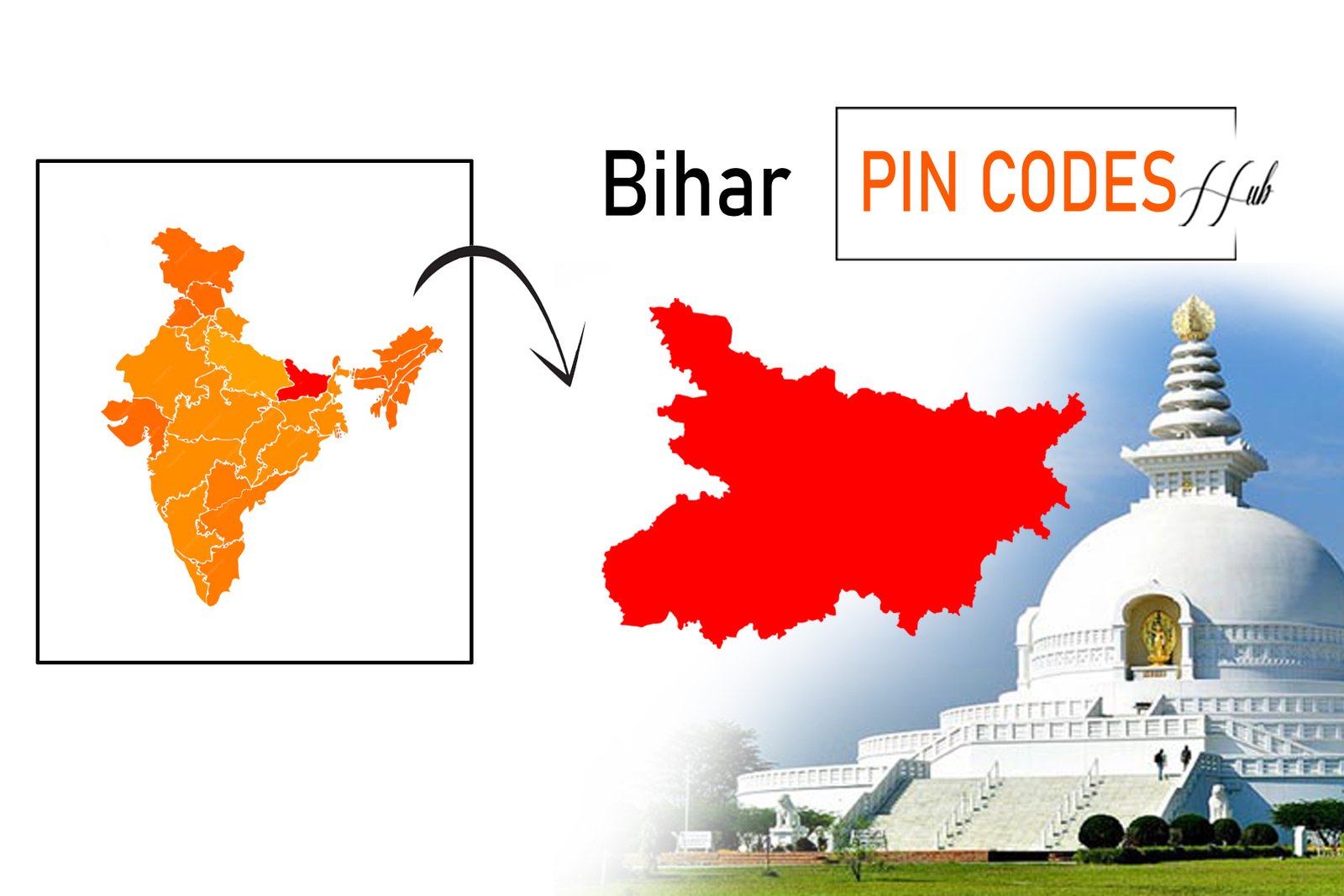
Complete Bihar Pincodes Guide:
Pincodes Bihar, located in the eastern part of India, is a state known for its rich historical heritage, vibrant culture, fertile plains, and religious significance. With the Ganges River flowing across its length, Bihar has long been a center of education, culture, and trade. Despite its densely populated regions and vast rural areas, the state has a well-organized postal system that ensures communication and delivery services reach every corner. India Post manages this network of post offices across cities, towns, and villages in Bihar, assigning each office a unique six-digit Postal Index Number (Pincode) to streamline mail delivery and ensure accuracy.
The Pincodes system in Bihar is essential for organizing postal services throughout the state. Most Pincodes in Bihar start with the number 8, which corresponds to the eastern postal zone of India. The subsequent digits in a Pincode help identify the exact district, the main sorting office, and the local post office responsible for mail delivery. This system is particularly important in Bihar, where many towns and villages may have similar names, and seasonal flooding or road connectivity issues can create challenges for delivery. Numeric codes allow postal workers to sort and route mail efficiently, reducing confusion and ensuring letters, parcels, and documents reach their intended destinations on time.
| District | Major Pincode(s) |
|---|---|
| Patna | 800001 – 800020 |
| Gaya | 823001 – 823007 |
| Muzaffarpur | 842001 – 842002 |
| Bhagalpur | 812001 – 813205 |
| Purnia | 854301 – 854334 |
| Darbhanga | 846001 – 846011 |
| Siwan | 841226 – 841247 |
| Nalanda | 803101 – 803117 |
| Araria | 854311 – 854335 |
| Begusarai | 851101 – 851128 |
| Buxar | 802101 – 802125 |
| East Champaran (Motihari) | 845401 – 845452 |
| West Champaran (Bettiah) | 845438 – 845455 |
| Vaishali | 844101 – 844122 |
| Saran | 841201 – 841245 |
| Rohtas | 821101 – 821310 |
| Jehanabad | 804406 – 804421 |
| Madhubani | 847211 – 847428 |
| Saharsa | 852201 – 852212 |
| Samastipur | 848101 – 848134 |
| Bhojpur (Ara) | 802301 – 802313 |
| Kaimur (Bhabua) | 821101 – 821305 |
| Sitamarhi | 843301 – 843331 |
| Supaul | 852131 – 852137 |
| Katihar | 854105 – 854129 |
| Khagaria | 851204 – 851211 |
| Madhepura | 852112 – 852128 |
| Banka | 813101 – 813208 |
| Lakhisarai | 811311 – 811311 |
| Sheikhpura | 811101 – 811105 |
| Jamui | 811307 – 811314 |
| Nalanda | 803101 – 803117 |

Bihar is divided into several districts, each with multiple post offices serving towns, cities, and rural settlements. Major districts include Patna, Gaya, Muzaffarpur, Bhagalpur, Purnia, Darbhanga, Siwan, Nalanda, Araria, Begusarai, Buxar, East Champaran (Motihari), West Champaran (Bettiah), Vaishali, Saran, Rohtas, Jehanabad, Madhubani, Saharsa, Samastipur, and many others. District-wise Pincodes are crucial for organizing mail delivery efficiently. District headquarters and larger towns generally have main post offices with central Pincodes while smaller towns and villages have branch or sub-post offices with their own unique codes. This hierarchical structure ensures smooth sorting and delivery operations across urban and rural areas.
The process of mail delivery in Bihar relies heavily on the Pincodes system. When mail arrives at a regional sorting facility, the first digits of the Pincodes direct it to the correct district or region, while the remaining digits specify the exact post office for delivery. This system enables India Post to manage a high volume of mail, even in remote or difficult-to-access areas. Seasonal challenges such as monsoon floods in riverine areas make accurate Pincodes even more critical for timely delivery.
Beyond traditional postal services, Pincodes have become an integral part of modern life in Bihar. People routinely enter their PPincodes when placing online orders, filling out government forms, registering for banking or insurance services, or using e-commerce platforms. Courier companies and delivery services rely on these codes to plan routes, estimate delivery times, and confirm service availability. In a state like Bihar, where rural and urban areas coexist closely, precise Pincodes information ensures that goods and services reach the right recipients without delay.
The district-wise Pincodes system also helps government authorities in planning and administration. Officials can use Pincodes to map regions for surveys, infrastructure development, public service delivery, and disaster management. Each Pincode corresponds to a specific geographic area, simplifying demographic analysis, resource allocation, and monitoring of government programs. This level of organization strengthens governance and ensures that even remote villages and towns are connected to state and national administration.
Additionally, post offices in Bihar serve as important centers for financial and governmental services. They provide banking facilities, distribute government notices, and facilitate communication between citizens and administrative authorities. Accurate Pincodes allow these services to reach their intended destinations efficiently, supporting communities in both urban and rural areas. For villages in flood-prone regions or areas with limited road connectivity, this system bridges the gap between remote locations and larger urban centers.
Overall, the Pincode system in Bihar is a vital component of the state’s communication and delivery infrastructure. By assigning a unique numeric code to every post office, the postal network can efficiently manage mail sorting, logistics, and deliveries. This organized system not only supports traditional mail but also underpins modern commerce, online services, and government operations. The district-wise Pincode system continues to connect people, enable trade, and enhance administrative efficiency across Bihar, ensuring that the state remains well-integrated with the rest of India despite geographic and infrastructural challenges.
Bihar Pincodes:
Bihar, situated in the eastern part of India, is a state known for its rich historical heritage, fertile plains, and vibrant cultural traditions. It is the birthplace of ancient civilizations, significant religious movements, and prominent educational centers such as Nalanda and Vikramshila. Despite having a dense population and vast rural expanses, Bihar has a well-organized postal network that ensures communication and delivery services reach every part of the state. The postal system is managed by India Post, which operates post offices across cities, towns, and villages, each assigned a unique six-digit Postal Index Number (Pincode) to streamline mail delivery and maintain accuracy.
The Pincodes system in Bihar is a critical tool for organizing postal services efficiently. Most PIN Codes in the state begin with the number 8, which corresponds to the eastern postal zone of India. The subsequent digits identify the district, the main sorting office, and the local post office responsible for mail delivery. This system is particularly important in Bihar, where many towns share similar names, and seasonal flooding or limited road connectivity can make deliveries challenging. Using numeric codes reduces errors and ensures letters, parcels, and important documents reach their destinations without delay.
Bihar consists of 38 districts, each with multiple post offices serving urban and rural areas. Major districts include Patna, Gaya, Muzaffarpur, Bhagalpur, Purnia, Darbhanga, Nalanda, East Champaran, West Champaran, Siwan, Saran, Begusarai, Buxar, Rohtas, Jamui, Madhubani, Saharsa, Munger, and many more. Each district is served by main post offices in district headquarters or larger towns, branch post offices in smaller towns, and sub-post offices in villages. Each office has a unique Pincode, which allows postal workers to sort and route mail accurately and efficiently.
The process of mail delivery in Bihar relies heavily on the Pincode system. When a letter or parcel reaches a regional sorting facility, the first few digits of the Pincode direct it to the appropriate district or region, while the last digits indicate the exact post office for delivery. This hierarchical system ensures that mail is processed quickly, even in remote or flood-prone areas. In districts like Patna or Gaya, where the volume of mail is high, accurate Pincodes help the postal system maintain efficiency and minimize errors.
Beyond traditional mail delivery, Pincodes play an important role in modern services in Bihar. People routinely use their PIN Codes when making online purchases, registering for banking services, applying for government schemes, or filling out official forms. E-commerce platforms, courier companies, and delivery services rely on PIN Codes to plan routes, estimate delivery times, and verify service coverage. In rural areas, where road connectivity may be limited, accurate PIN Codes ensure that goods, documents, and services reach the intended recipients on time.
The district-wise Pincode system also supports administrative and governance activities. Government authorities use PIN Codes to map regions for surveys, infrastructure development, disaster relief, and delivery of public services. Each code corresponds to a specific geographic area, which simplifies demographic studies, resource allocation, and monitoring of development programs. This organized approach strengthens governance and ensures that even the most remote villages and small towns remain connected to state and national administration.
Additionally, post offices in Bihar provide essential banking and financial services. They distribute government notices, facilitate monetary transactions, and act as centers for communication between citizens and authorities. Accurate PIN Codes allow these services to be routed efficiently, which is particularly important for rural communities and areas that may face seasonal challenges such as flooding. Post offices bridge the gap between urban and rural regions, ensuring that all residents have access to essential services.
Overall, the Pincode system in Bihar is a cornerstone of the state’s communication and delivery infrastructure. By assigning a unique numeric code to every post office, the postal network can efficiently manage mail sorting, logistics, and deliveries across both urban centers and remote villages. This organized system supports not only traditional postal services but also modern commerce, e-governance, and administrative efficiency. The district-wise Pincode structure continues to connect people, facilitate trade, and enhance government services throughout Bihar, ensuring that the state remains linked to the rest of India despite geographical and infrastructural challenges
conclusion:
The Pincode system in Bihar serves as a backbone for communication, logistics, and administrative efficiency across the state. By assigning a unique six-digit code to every post office, India Post has created a structure that allows mail, parcels, and important documents to reach even the most remote villages in a timely and organized manner. This system is particularly crucial in Bihar, where rivers, seasonal flooding, and rural road networks can create challenges for transportation and delivery. With district-wise PIN Codes, postal workers can accurately sort and route mail, reducing delays and errors, and ensuring that communication remains uninterrupted across both urban and rural areas.
Beyond traditional postal services, PIN Codes in Bihar have become an essential part of everyday life. They are widely used in online commerce, banking services, government form submissions, and courier deliveries. Accurate Pincodes help businesses plan routes, estimate delivery times, and verify service availability, while also helping citizens access essential services efficiently. For government authorities, the structured system allows better planning, resource allocation, and implementation of public schemes. Each Pincode corresponds to a defined geographic area, which simplifies surveys, development projects, and disaster management efforts, ensuring that even remote communities are included in administrative and developmental programs.
Moreover, post offices in Bihar play a broader role beyond mail delivery. They provide financial services, facilitate government notifications, and act as a connecting point between citizens and administrative authorities. The Pincode system ensures that these services reach their intended recipients without confusion or delay, bridging the gap between urban and rural areas.
In summary, Bihar’s Pincode network is more than just a postal tool—it is a system that supports commerce, governance, communication, and development across the state. It strengthens connectivity, enhances administrative efficiency, and ensures that every district, town, and village remains linked to the broader framework of India. The Pincode system continues to be a vital part of Bihar’s social, economic, and administrative infrastructure, maintaining seamless connections across diverse and challenging terrains.