
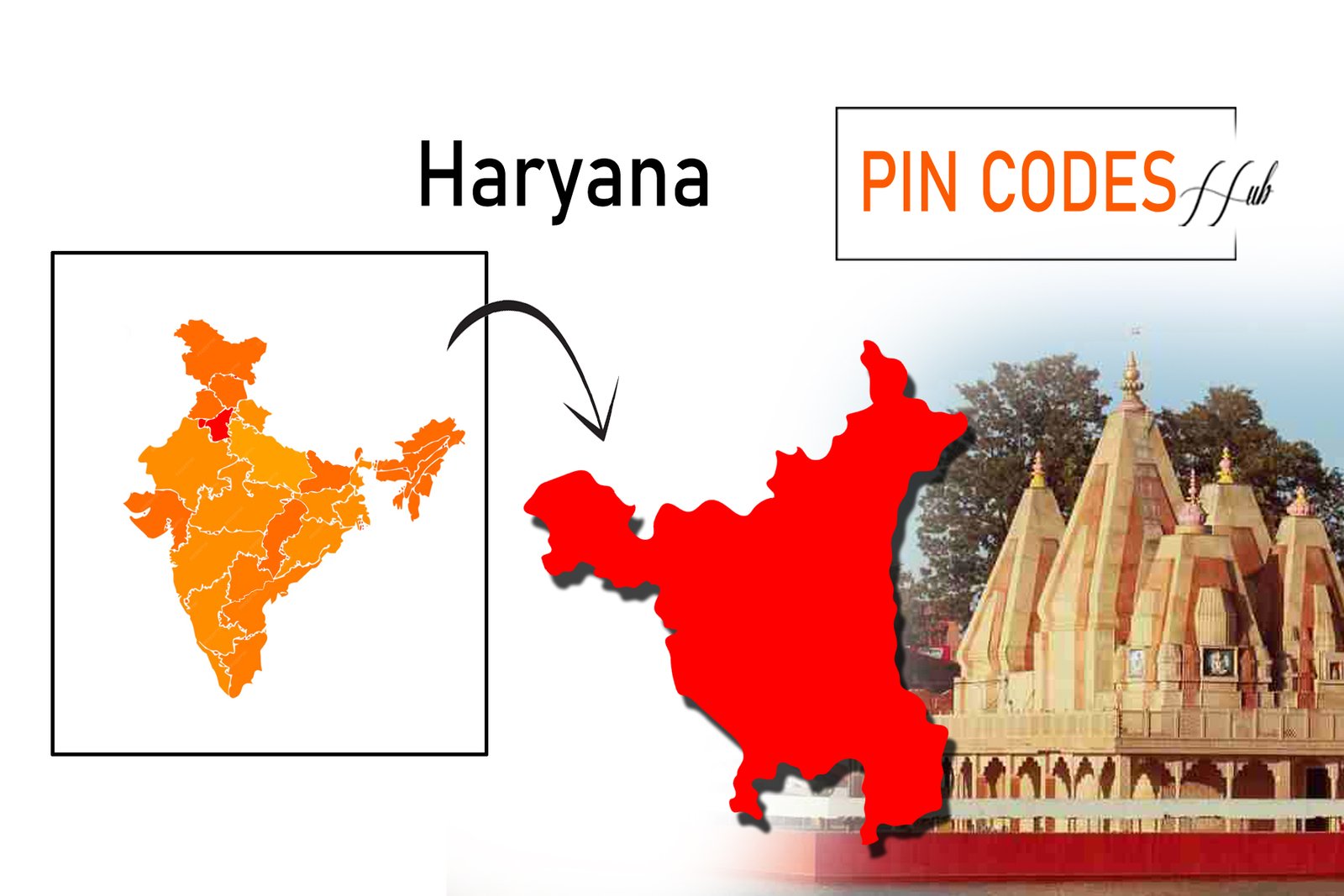
📌 Introduction
Haryana is one of India’s most rapidly developing states, known for its strong agricultural economy, expanding industrial sector, modern infrastructure, and growing urban centers. Located in northern India, Haryana surrounds the national capital region on three sides and plays a crucial role in the country’s manufacturing, logistics, automobile production, and agricultural output.
From the corporate offices and technology parks of Gurugram to the industrial zones of Faridabad, Panipat, and Sonipat, as well as the agricultural villages spread across the state, millions of letters, parcels, banking documents, government notices, and e-commerce shipments move through Haryana every year. Efficient postal and courier services are essential for connecting businesses, government institutions, and residents across these diverse regions.
To manage this vast communication and delivery network, India Post uses the Postal Index Number (PIN) system. A PIN code is a six-digit numerical identifier assigned to a specific post office and delivery area. It helps postal authorities, courier companies, banks, government departments, and e-commerce platforms accurately identify locations and route shipments without confusion.
In a state like Haryana, where urban expansion is rapid and industrial activity continues to grow, using the correct PIN code is essential for ensuring timely deliveries, accurate address verification, and smooth logistics operations. Whether you are ordering products online, sending official documents, applying for government services, or receiving important correspondence, the correct PIN code helps prevent delays and delivery errors.
This comprehensive guide explains how Haryana PIN codes work, district-wise coverage, major postal regions, delivery processes, practical uses, and tips for ensuring accurate deliveries throughout the state.
🌍 About Haryana
Haryana was established in 1966 and has since emerged as one of India’s most economically significant states. It shares borders with Punjab, Himachal Pradesh, Rajasthan, Uttar Pradesh, and the National Capital Territory of Delhi.
The state is widely known for:
- Automobile manufacturing industries
- Agricultural production
- Information technology parks
- Logistics and warehousing hubs
- Educational institutions
- Industrial corridors
- Rapid urban development
Its strategic location near Delhi has contributed to the development of an extensive postal and transportation network that supports both domestic and international business activities.

🏙️ Major Cities of Haryana
Several cities serve as important commercial, industrial, educational, and administrative centers.
| City | Importance |
|---|---|
| Gurugram | Corporate and IT hub |
| Faridabad | Industrial and manufacturing center |
| Panipat | Textile and petrochemical industries |
| Karnal | Agricultural and educational center |
| Hisar | Commercial and educational hub |
| Rohtak | Administrative and educational center |
| Sonipat | Industrial and logistics hub |
| Ambala | Transportation and military center |
| Panchkula | Planned city and administrative center |
| Yamunanagar | Timber and paper industries |
These cities handle a significant share of Haryana’s postal and courier traffic.
📍 Understanding the PIN Code System
PIN stands for Postal Index Number, a six-digit code introduced by India Post in 1972 to improve mail sorting and delivery efficiency throughout India.
For example, consider the PIN code 122001.
First Digit
The first digit 1 represents India’s Northern Postal Zone.
Second Digit
The second digit identifies the postal sub-region.
Third Digit
The third digit indicates the sorting district responsible for processing mail.
Last Three Digits
The final three digits identify the specific post office responsible for local delivery.
Because Haryana belongs to the northern postal region, most PIN codes in the state begin with the digit 1.
Common Haryana PIN code series include:
- 121xxx
- 122xxx
- 123xxx
- 124xxx
- 125xxx
- 126xxx
- 127xxx
- 132xxx
- 133xxx
- 134xxx
- 135xxx
- 136xxx
These prefixes help postal authorities quickly identify destinations and route shipments efficiently.
🏤 Haryana Postal Network Overview
Haryana has a well-developed postal network connecting metropolitan areas, industrial centers, towns, and rural villages.
Major postal hubs include:
- Gurugram
- Faridabad
- Panipat
- Karnal
- Ambala
- Hisar
- Rohtak
- Sonipat
- Panchkula
- Yamunanagar
These centers receive, sort, and distribute large volumes of mail and parcels daily.
In addition to postal services, many post offices provide:
- Savings accounts
- Money transfer facilities
- Postal Life Insurance
- India Post Payments Bank services
- Pension distribution
- Government benefit payments
This makes the postal network an important part of Haryana’s communication and financial infrastructure.
🗂️ Haryana District-Wise PIN Codes
| District | Important PIN Codes |
|---|---|
| Ambala | 133001, 133002, 134003 |
| Bhiwani | 127021, 127031, 127306 |
| Charkhi Dadri | 127306 |
| Faridabad | 121001, 121002, 121004 |
| Fatehabad | 125050, 125053 |
| Gurugram | 122001, 122002, 122003 |
| Hisar | 125001, 125004, 125005 |
| Jhajjar | 124102, 124103 |
| Jind | 126102, 126114 |
| Kaithal | 136027 |
| Karnal | 132001, 132036 |
| Kurukshetra | 136118, 136131 |
| Mahendragarh | 123029 |
| Nuh | 122107 |
| Palwal | 121102 |
| Panchkula | 134101, 134102, 134109 |
| Panipat | 132103 |
| Rewari | 123401 |
| Rohtak | 124001 |
| Sirsa | 125055, 125077, 125104 |
| Sonipat | 131001 |
| Yamunanagar | 135001 |
Note: These are example PIN codes. Every district contains numerous post offices, and each post office has its own unique PIN code.
🚚 How PIN Codes Help Deliveries
Whenever a parcel enters the postal system, the PIN code determines its delivery route.
Step 1: Collection
The shipment is accepted from the sender.
Step 2: Sorting
The parcel reaches a sorting facility where the PIN code identifies the destination region.
Step 3: Regional Routing
The shipment is transferred to the appropriate district distribution center.
Step 4: Local Distribution
The parcel reaches the designated post office.
Step 5: Final Delivery
A postal worker or courier executive delivers the shipment to the recipient.
This organized process allows millions of deliveries to be handled efficiently every year.

🌆 Urban and Rural Delivery Network
Urban Areas
Cities such as Gurugram, Faridabad, Panipat, and Panchkula experience:
- High parcel volumes
- Multiple delivery routes
- Large courier networks
- Faster delivery timelines
Rural Areas
Villages and agricultural regions often have:
- Fewer post offices
- Larger service areas
- Shared delivery routes
- Longer transit times in some locations
The PIN code system helps maintain delivery accuracy across both urban and rural areas.
🛒 Importance of PIN Codes in Daily Life
Today, PIN codes are used in many essential services:
Online Shopping
E-commerce companies use PIN codes to determine:
- Serviceability
- Shipping charges
- Delivery estimates
Banking Services
Banks use PIN codes for:
- Address verification
- Debit card delivery
- KYC compliance
Government Services
Government departments rely on PIN codes for:
- Aadhaar correspondence
- Welfare programs
- Official notices
- Passport communication
Logistics and Business Operations
Businesses use postal codes for inventory management, transportation planning, and customer deliveries.
📦 Growth of E-Commerce in Haryana
Haryana has become one of India’s major e-commerce and logistics markets due to its proximity to Delhi and excellent transportation infrastructure.
Large warehousing and fulfillment centers located in Gurugram, Faridabad, Sonipat, and Panipat support online shopping deliveries across North India.
Accurate PIN codes help:
- Improve shipment tracking
- Reduce delivery failures
- Optimize courier routes
- Enhance customer satisfaction
As digital commerce continues to expand, accurate postal information remains increasingly important.
⚠️ Common Mistakes to Avoid
Many delivery problems occur because of incorrect address details.
Common mistakes include:
- Entering the wrong PIN code
- Using a nearby area’s PIN code
- Providing incomplete addresses
- Omitting landmarks
- Using outdated address information
Even a single incorrect digit can result in delays or misrouted shipments.
🔍 How to Find the Correct Haryana PIN Code
If you are unsure about the PIN code for a specific location in Haryana, there are several reliable ways to find it.
Visit the India Post Website
India Post provides an official PIN code search facility where users can search by district, locality, village, town, or post office name.
Contact Your Local Post Office
Local post offices can quickly confirm the correct PIN code for nearby areas and villages.
Verify Before Online Orders
When shopping online, always double-check your delivery address and PIN code before placing an order. A small mistake can cause delays or failed deliveries.
Use Government Records
Official documents such as Aadhaar cards, voter ID cards, bank statements, utility bills, and property records often contain the correct postal code.
Confirm Rural Addresses Carefully
In rural areas, multiple villages may be served by the same post office. Always verify the exact PIN code with local authorities or postal staff before sending important documents.
Using the correct Haryana PIN code helps improve delivery accuracy, speeds up parcel routing, and reduces the chances of shipment delays.
🚚 Major Delivery Hubs in Haryana
Haryana’s strategic location around the National Capital Region (NCR) has made it one of India’s most important logistics and distribution centers. Several cities serve as major postal and courier hubs, helping India Post and private logistics companies manage the movement of parcels, business shipments, government communications, and e-commerce deliveries throughout the state.
Gurugram
Gurugram is Haryana’s largest corporate and technology hub. Thousands of businesses, multinational companies, financial institutions, and IT firms operate from the city, generating significant volumes of postal and courier traffic every day. The city’s excellent road connectivity and proximity to Delhi make it a major logistics center.
Faridabad
Faridabad is one of northern India’s leading industrial cities. Manufacturing units, industrial estates, and commercial establishments depend on efficient postal and courier services for transporting documents, spare parts, and business shipments across the country.
Panipat
Known for its textile, petrochemical, and manufacturing industries, Panipat handles substantial volumes of commercial deliveries. The city’s strategic location along major transportation corridors supports efficient parcel movement.
Sonipat
Sonipat has emerged as an important warehousing and logistics destination due to its industrial growth and proximity to Delhi. Several e-commerce companies and logistics providers operate fulfillment and distribution facilities in the region.
Ambala
Ambala serves as a key transportation and distribution center in northern Haryana. Its railway connectivity and military establishments contribute to significant postal activity throughout the district.
Karnal and Hisar
Karnal and Hisar act as major service centers for Haryana’s agricultural regions. Postal and courier networks in these cities support farmers, educational institutions, businesses, and government departments across surrounding districts.
Together, these delivery hubs help ensure efficient mail and parcel distribution across Haryana’s urban centers, industrial zones, towns, and rural communities.

⚠️ Delivery Challenges in Haryana
Although Haryana has one of India’s most developed transportation and logistics networks, certain challenges can occasionally affect postal and courier operations.
Rapid Urban Expansion
Cities such as Gurugram, Faridabad, Sonipat, and Panchkula continue to expand rapidly. New residential sectors, commercial complexes, and industrial areas require regular updates to postal databases and delivery routes.
High E-Commerce Volumes
The growth of online shopping has significantly increased parcel volumes throughout Haryana. Managing millions of deliveries requires continuous improvements in sorting, warehousing, and last-mile delivery infrastructure.
Rural Connectivity
While most villages are well connected, some remote rural locations may experience slightly longer delivery timelines compared to major urban centers.
Seasonal Weather Conditions
Heavy monsoon rainfall, localized flooding, and occasional winter fog can temporarily impact transportation schedules and delivery operations.
Industrial Shipment Demand
As a major manufacturing state, Haryana handles large volumes of industrial and commercial shipments. Efficient coordination between postal services, courier companies, and logistics providers is necessary to maintain delivery performance.
Despite these challenges, Haryana’s organized PIN code system and strong transportation infrastructure help ensure reliable communication and delivery services throughout the state.
❓ Frequently Asked Questions
Do all Haryana PIN codes start with 1?
Yes. Most Haryana PIN codes begin with the digit 1 because the state belongs to India’s Northern Postal Zone.
What is the PIN code of Gurugram?
Popular Gurugram PIN codes include 122001, 122002, and 122003, depending on the locality.
Can multiple villages share the same PIN code?
Yes. Several nearby villages may be served by a single post office and therefore share the same PIN code.
Why is my PIN code not accepted on an online shopping website?
The PIN code may be entered incorrectly, or the area may not currently be serviceable by that platform’s logistics partner.
Is a PIN code mandatory for courier deliveries?
Yes. Most courier companies require a valid PIN code to ensure accurate routing and delivery.
🏁 Conclusion
The Haryana PIN code system forms the backbone of the state’s postal, logistics, and communication infrastructure. It enables accurate location identification, efficient parcel routing, and reliable delivery services across major cities, industrial hubs, towns, and villages.
From the corporate offices of Gurugram and manufacturing centers of Faridabad to the agricultural regions of Karnal, Hisar, and Sirsa, PIN codes help connect people, businesses, and government institutions every day. Whether you are receiving an online order, sending important documents, or verifying an address, using the correct Haryana PIN code helps save time, reduce delivery errors, and ensure smooth communication.
As Haryana continues to grow as one of India’s leading economic and industrial states, the importance of accurate postal information and efficient delivery systems will only continue to increase.
1 thought on “8.Haryana Pincodes: Complete All 22 Districts”