
Understanding the Postal System That Connects the Nation:
Introduction:
India is one of the largest and most diverse countries in the world. From the Himalayan towns of the north to the coastal cities of the south, millions of people depend on reliable communication and delivery services every day. Letters, government documents, bank cards, passports, educational certificates, courier parcels, and online shopping orders travel across thousands of kilometers before reaching their destinations.
Managing such a massive network would be extremely difficult without a standardized addressing system. This is where the Postal Index Number, commonly known as the PIN code, plays a vital role.
Most people enter a PIN code while placing an online order, filling out a bank form, applying for government services, or sending a parcel. Although it appears to be just a six-digit number, it is one of the most important elements of India’s communication and logistics infrastructure.
A PIN code helps identify a specific delivery area, reduces errors caused by similar place names, and enables postal and courier services to process millions of deliveries efficiently. Whether you live in a metropolitan city, a small town, or a remote village, the correct PIN code helps ensure that important documents and parcels reach you without unnecessary delays.
This guide explains how the Indian PIN code system works, why it was introduced, how it supports modern logistics, and why it continues to remain essential in the digital age.

Understanding the PIN Code System
PIN stands for Postal Index Number. It is a six-digit code used by India Post to identify geographical delivery locations across the country.
Before the introduction of PIN codes, postal operations often faced challenges due to similar place names, language differences, spelling variations, and incomplete addresses. Sorting mail manually for a country as large as India was both time-consuming and prone to mistakes.
To address these challenges, India Post introduced the PIN code system in 1972. The objective was simple: create a standardized method for identifying locations and improving the accuracy of mail delivery.
Today, every PIN code represents a specific postal region and helps route mail through a structured delivery network.
Why PIN Codes Were Introduced
India has thousands of towns and villages, and many locations share similar names. In some cases, multiple states may have places with nearly identical names.
Without a numerical identification system, postal workers would have to rely solely on written addresses, increasing the chances of errors and delays.
The introduction of PIN codes helped:
- Improve sorting accuracy
- Reduce delivery delays
- Eliminate confusion between similar place names
- Increase efficiency in postal operations
- Support the growing communication needs of the country
Over time, the importance of PIN codes expanded beyond postal services and became essential for banking, logistics, e-commerce, government administration, and digital services.
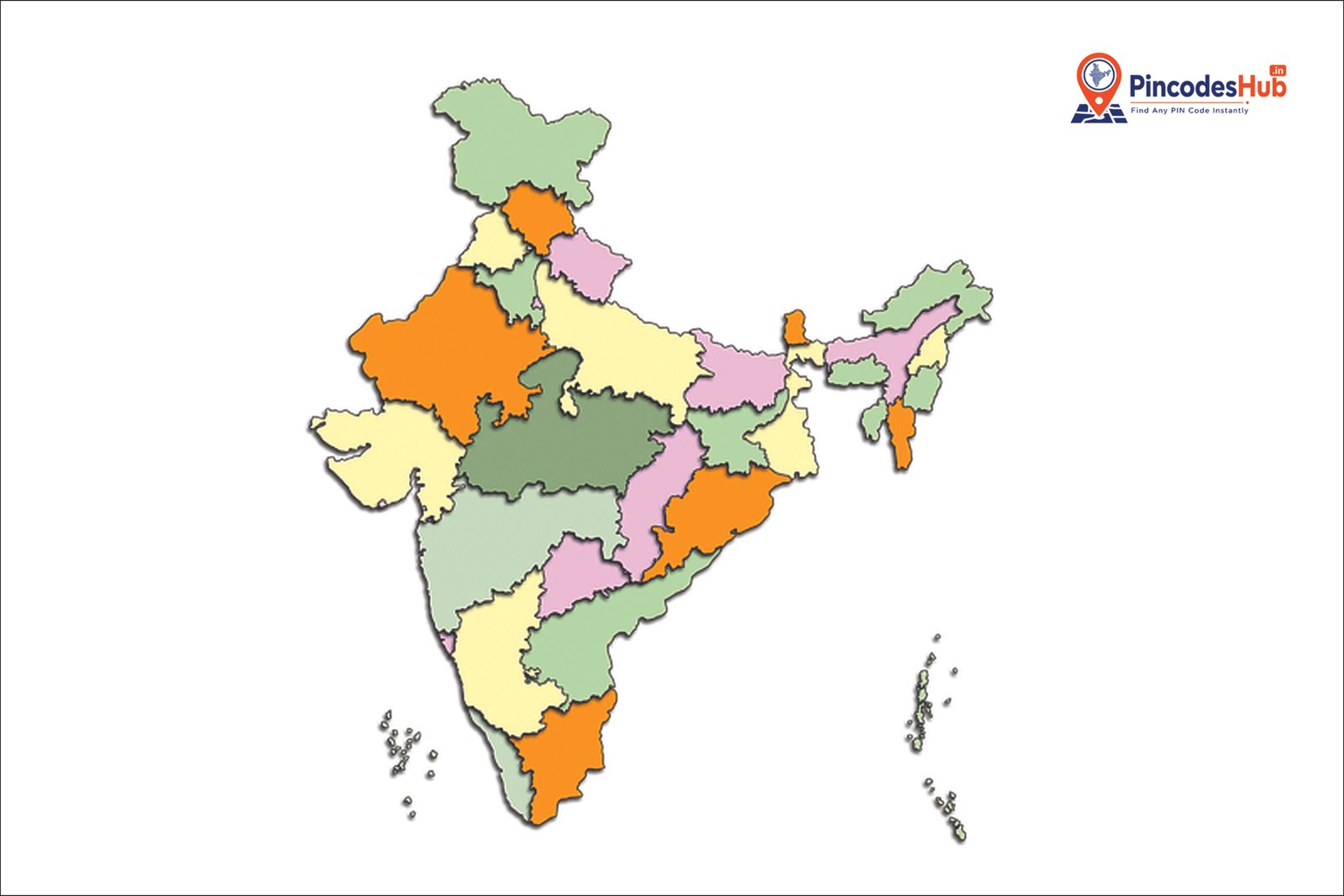
🇮🇳 Indian States and Their Importance
Andhra Pradesh – Known for its long coastline, major ports, fertile river deltas, and rapidly growing industrial sectors.
Arunachal Pradesh – India’s easternmost state, famous for its mountains, forests, and diverse tribal cultures.
Assam – Renowned for tea plantations, the Brahmaputra River, and rich biodiversity.
Bihar – One of India’s oldest historical regions and an important agricultural state.
Chhattisgarh – Rich in mineral resources and known for its forests and tribal heritage.
Goa – India’s smallest state by area, famous for beaches, tourism, and Portuguese heritage.
Gujarat – A leading industrial and commercial state with major ports and manufacturing centers.
Haryana – An important agricultural and industrial state surrounding the national capital region.
Himachal Pradesh – Known for scenic hill stations, tourism, and horticulture.
Jharkhand – Rich in coal, iron ore, and other natural resources.
Karnataka – Home to Bengaluru, India’s technology capital, and a major innovation hub.
Kerala – Famous for backwaters, high literacy, healthcare, and tourism.
Madhya Pradesh – Located in central India and known for wildlife reserves and historical monuments.
Maharashtra – India’s financial powerhouse and home to Mumbai, the country’s commercial capital.
Manipur – A culturally rich northeastern state known for sports and traditional arts.
Meghalaya – Famous for living root bridges, waterfalls, and high rainfall.
Mizoram – A scenic hill state known for its forests and strong community culture.
Nagaland – Known for vibrant tribal traditions and the famous Hornbill Festival.
Odisha – Home to ancient temples, coastal regions, and significant mineral resources.
Punjab – Known as the breadbasket of India due to its agricultural productivity.
Rajasthan – India’s largest state by area, famous for deserts, forts, and royal heritage.
Sikkim – A Himalayan state known for natural beauty and organic farming initiatives.
Tamil Nadu – Renowned for temples, manufacturing industries, and cultural heritage.
Telangana – Home to Hyderabad, a major center for technology, pharmaceuticals, and business.
Tripura – A northeastern state known for cultural diversity and natural landscapes.
Uttar Pradesh – India’s most populous state and home to many historic and religious destinations.
Uttarakhand – Famous for Himalayan pilgrimage sites, rivers, and adventure tourism.
West Bengal – Known for Kolkata, rich literary traditions, and major port activities.
Union Territories
Andaman and Nicobar Islands – A group of islands in the Bay of Bengal known for beaches and marine biodiversity.
Chandigarh – A planned city serving as the capital of both Punjab and Haryana.
Dadra and Nagar Haveli and Daman and Diu – A Union Territory known for coastal attractions and industrial growth.
Delhi (National Capital Territory) – The capital of India and a major administrative, political, and economic center.
Jammu and Kashmir – Known for its scenic valleys, lakes, and tourism.
Ladakh – A high-altitude region famous for mountains, monasteries, and adventure travel.
Lakshadweep – India’s smallest Union Territory, consisting of beautiful coral islands.
Puducherry – Known for French colonial architecture, beaches, and cultural heritage.
How a PIN Code Is Structured
A PIN code contains six digits, and each digit serves a specific purpose.
Example: 110001
The first digit identifies the postal zone.
The second digit represents the sub-region within that zone.
The third digit identifies the sorting district.
The last three digits indicate the specific post office responsible for delivery.
This structured system enables mail to move systematically from national distribution centers to regional hubs and finally to local post offices.
Because every stage follows a standardized numbering system, deliveries can be processed faster and more accurately.
Postal Zones of India
India is divided into multiple postal zones that simplify nationwide mail management.
The first digit of a PIN code determines the postal zone.
Northern regions, western states, southern states, eastern regions, and military postal services each fall under designated numbering categories.
This arrangement allows postal authorities to identify broad geographical destinations instantly and direct shipments toward the correct regional network.
The zoning system continues to serve as the foundation of India’s postal infrastructure.
The Role of PIN Codes in Everyday Life
Many people associate PIN codes only with postal deliveries, but their role extends much further.
Every day, millions of individuals use PIN codes without realizing how much they influence modern services.
When you order products online, the seller checks your PIN code to determine delivery availability. When a bank sends a debit card, the PIN code helps verify your address. When government departments dispatch official documents, PIN codes ensure they reach the correct location.
These six digits have become a key part of modern identity and location verification systems.
Online Shopping and E-Commerce
The rapid growth of online shopping has made PIN codes more important than ever.
E-commerce companies use PIN codes to:
- Verify service availability
- Estimate delivery timelines
- Allocate warehouse inventory
- Calculate shipping costs
- Assign delivery partners
Without PIN codes, managing deliveries to millions of customers across India would be extremely difficult.
Whenever a customer enters an address during checkout, the PIN code is one of the first details analyzed by the system.
Banking and Financial Services
Banks and financial institutions rely heavily on PIN codes for address verification and customer communication.
PIN codes are commonly used during:
- Account opening procedures
- KYC verification
- Loan applications
- Debit and credit card delivery
- Insurance documentation
Accurate location information helps institutions maintain records and communicate with customers efficiently.
Government Services and Documentation
Government departments frequently use PIN codes while processing applications and correspondence.
Important services that depend on accurate PIN code information include:
- Aadhaar-related communication
- Passport services
- Voter registration
- Welfare scheme administration
- Tax documentation
An incorrect PIN code can sometimes result in delayed processing or delivery issues.
Courier and Logistics Operations
Modern logistics companies process enormous shipment volumes every day.
PIN codes help them:
- Design delivery routes
- Group shipments efficiently
- Identify serviceable locations
- Reduce operational costs
- Improve delivery performance
Many logistics systems automatically sort parcels based on PIN code information, making operations faster and more reliable.
Rural Connectivity and Postal Access
One of the most remarkable aspects of India’s postal system is its ability to reach remote villages and rural communities.
In many areas, post offices continue to play a critical role in communication, banking access, and government outreach.
PIN codes help connect these regions to national networks, ensuring that services remain accessible regardless of geographical challenges.
Common Mistakes People Make
Delivery issues often occur because of avoidable mistakes.
Some common errors include:
- Entering the wrong PIN code
- Selecting a neighboring locality
- Using outdated address information
- Spelling locality names incorrectly
- Omitting district information
Even a small error can affect delivery accuracy.
Therefore, it is always advisable to verify address details carefully before submitting forms or placing orders.

Why PIN Codes Remain Relevant in the Digital Age
Many people assume that GPS and digital maps have reduced the importance of PIN codes.
In reality, PIN codes remain one of the most trusted location-identification systems in India.
Unlike GPS coordinates, PIN codes are simple, standardized, and universally recognized by organizations across different sectors.
They provide a consistent framework that can be used by postal services, government departments, banks, logistics providers, and digital platforms alike.
As technology evolves, PIN codes continue to complement modern location systems rather than replace them.
Looking Ahead
India’s economy, population, and digital ecosystem continue to expand rapidly.
With increasing online commerce, digital banking, and nationwide logistics operations, the importance of accurate location identification is greater than ever.
PIN codes will remain a critical component of India’s communication infrastructure for years to come.
They help connect businesses with customers, government agencies with citizens, and communities with essential services.
Conclusion
The Indian PIN code system is far more than a collection of six-digit numbers. It is a carefully designed framework that supports communication, logistics, banking, governance, and commerce across one of the world’s largest countries.
From urban centers to remote villages, PIN codes help ensure that information, services, and deliveries reach the correct destination efficiently. They simplify complex addressing systems, improve operational accuracy, and support the smooth functioning of countless organizations.
Whether you are sending a letter, receiving a parcel, opening a bank account, or shopping online, the correct PIN code plays an important role in making the process reliable and efficient.
As India continues to grow and modernize, the PIN code system will remain one of the most valuable tools connecting people, businesses, and services throughout the country.
19 thoughts on “Complete Guide to PIN Codes in India (2026 Updated)”