
Introduction
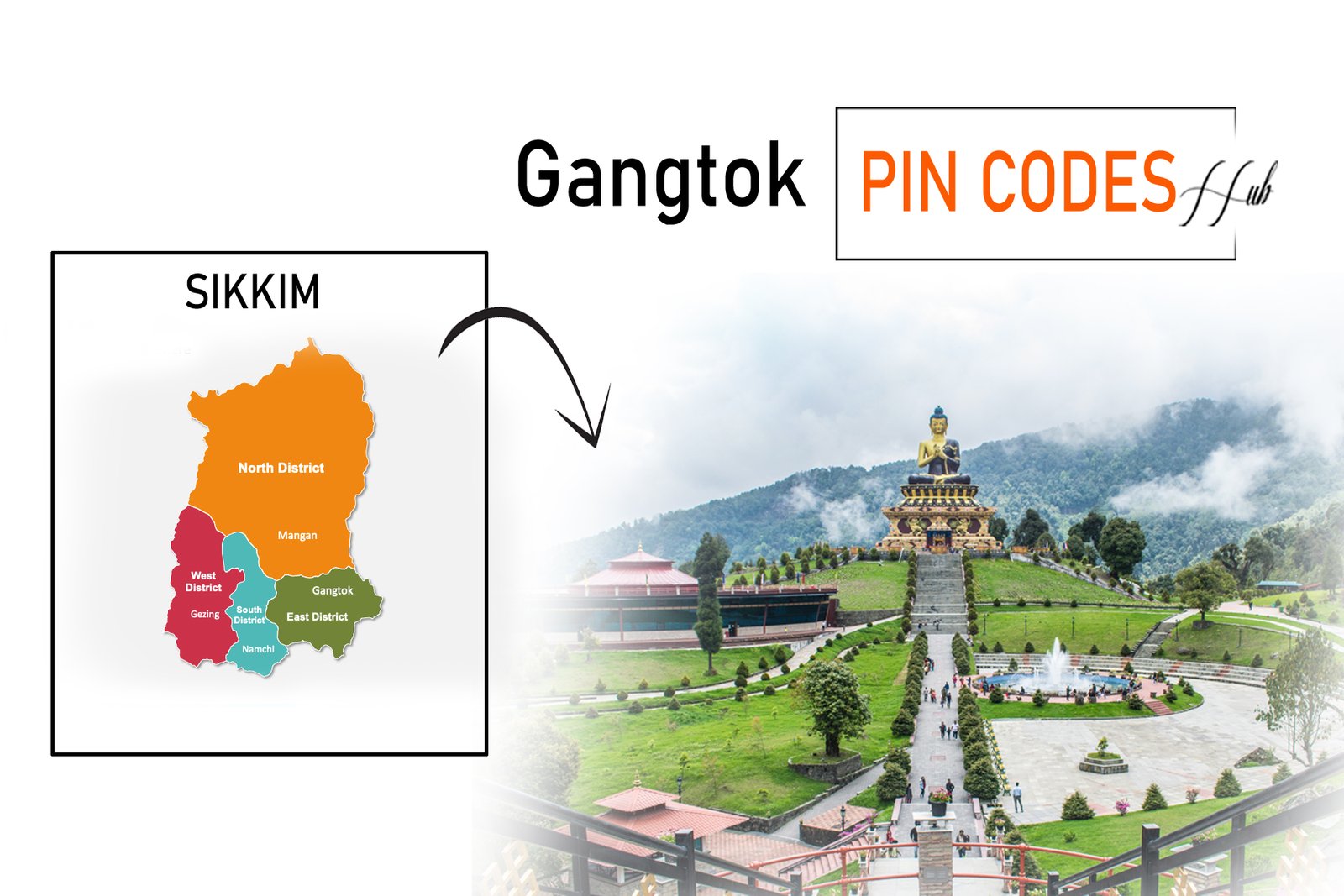
Gangtok, the capital of Sikkim, is one of the most scenic and peaceful cities in India. Located in the Eastern Himalayas, Gangtok is known for its natural beauty, clean surroundings, and organized urban lifestyle.
Although the city appears calm and less crowded compared to metro cities, it plays a significant role as an administrative, tourism, and commercial center. With growing infrastructure, increasing online services, and expanding residential areas, managing communication and deliveries efficiently is essential.
This is where the PIN (Postal Index Number) code system becomes important. These six-digit codes help ensure that letters, parcels, and official documents reach the correct destination without confusion—even in a city where geography can make navigation challenging.
What is a PIN Code?
A PIN code is a six-digit numerical system introduced by India Post in 1972. It was designed to simplify mail sorting and eliminate errors caused by similar place names, incomplete addresses, or unclear handwriting.
Structure of a PIN Code
Each digit in a PIN code represents a specific detail:
- 1st digit: Postal zone (Eastern India = 7)
- 2nd digit: Sub-region
- 3rd digit: Sorting district (Sikkim region = 737)
- Last 3 digits: Specific post office
👉 Most Gangtok PIN codes begin with 737, which identifies the Sikkim postal region.

Gangtok PIN Code Overview
Here is a list of important areas and their PIN codes:
| S.No | Area / Location | PIN Code |
|---|---|---|
| 1 | Gangtok Head Post Office | 737101 |
| 2 | Tadong | 737102 |
| 3 | Deorali | 737102 |
| 4 | Burtuk | 737103 |
| 5 | Ranipool | 737135 |
| 6 | Lingdum | 737107 |
Each PIN code corresponds to a specific post office responsible for managing deliveries within that area.
Geography and Its Impact on Postal Services
Gangtok is built on steep hills, which makes it very different from cities located on plains. This geography directly affects how postal services operate.
Key Challenges:
- Roads are narrow and winding
- Houses are located at different elevations
- Some locations are not directly accessible by vehicles
- Weather conditions like fog and rain can affect visibility
Because of these factors, accurate PIN codes are essential. They help postal workers identify the correct delivery zone before starting their route, reducing confusion and saving time.
Key Areas in Gangtok
Gangtok Central (737101)
This is the main area of the city, covering locations such as MG Marg, Lal Bazaar, and nearby commercial zones. It handles the highest volume of postal and courier activity.
Tadong (737102)
Tadong is a busy locality with colleges, hostels, and residential areas. It has a high demand for parcel deliveries due to student population and local businesses.
Deorali (737102)
Deorali is an important transport hub connecting Gangtok to other parts of Sikkim. It shares the same PIN code as Tadong in many cases.
Burtuk (737103)
A quieter residential area with local communities. It experiences moderate postal activity compared to central areas.
Ranipool (737135)
Located on the outskirts, Ranipool is important for connectivity. It includes both residential and industrial zones.
Lingdum (737107)
A nearby developing region known for monasteries, residential growth, and peaceful surroundings.

Importance of PIN Codes in Daily Life
PIN codes are used in many aspects of everyday life in Gangtok.
📦 Online Shopping
With increasing use of e-commerce platforms, PIN codes help:
- Check delivery availability
- Estimate delivery time
- Route parcels accurately
🏦 Banking and Financial Services
Banks rely on PIN codes for:
- Address verification
- Delivery of debit/credit cards
- Sending financial documents
🏛️ Government Services
Services such as Aadhaar, PAN card, and voter ID require correct PIN codes for proper processing and delivery.
🎓 Education and Communication
Students depend on postal services for:
- Admit cards
- Certificates
- Official communication
Correct PIN codes ensure timely delivery of important documents.
Rural Connectivity Around Gangtok
Gangtok is surrounded by smaller towns and villages that depend on the city’s postal system.
In these areas:
- One post office may serve multiple villages
- Addresses may rely on landmarks
- Postal workers use local knowledge for delivery
PIN codes help connect these rural areas to essential services such as banking, healthcare, and government schemes.
Role of Post Offices in Gangtok
Post offices in Gangtok provide several services beyond mail delivery:
- Savings and deposit schemes
- Money transfer services
- Insurance policies
- Pension distribution
- Government documentation services
For many residents, especially in remote areas, post offices remain a trusted and accessible institution.
Challenges in Gangtok’s Postal System
Hilly Terrain
Steep slopes and uneven roads make deliveries physically demanding.
Weather Conditions
Rain, fog, and occasional landslides can disrupt transportation.
Addressing Issues
Some areas still depend on landmarks instead of structured addresses.
Limited Accessibility
Certain locations require walking for final delivery.
Despite these challenges, the PIN code system ensures efficient organization and routing.
PIN Codes in the Digital Era
Today, PIN codes are widely used in:
- E-commerce platforms
- Courier and logistics services
- Banking and financial apps
- Government databases
- Location-based services
They play an essential role in both physical and digital communication systems.
Why PIN Codes Are Important
PIN codes provide:
- Accurate delivery of mail and parcels
- Organized postal management
- Faster communication
- Reliable services
- Support for economic growth
FAQs About Gangtok PIN Codes
What is the main PIN code of Gangtok?
The main PIN code is 737101.
Why do Gangtok PIN codes start with 737?
Because Gangtok falls under the eastern postal zone assigned to Sikkim.
Can multiple areas share the same PIN code?
Yes, especially if they are served by the same post office
What happens if the PIN code is incorrect?
The delivery may be delayed or misrouted.
Are PIN codes necessary for online shopping?
Yes, they are essential for order processing and delivery.
Conclusion
Gangtok’s PIN code system is a vital part of its communication infrastructure. In a city shaped by hills and unique geography, these six-digit codes ensure that letters, parcels, and services reach the correct destination efficiently.
From central areas to remote neighborhoods, PIN codes connect every part of Gangtok. In today’s digital world, they continue to play a key role in supporting communication, logistics, and everyday life.