
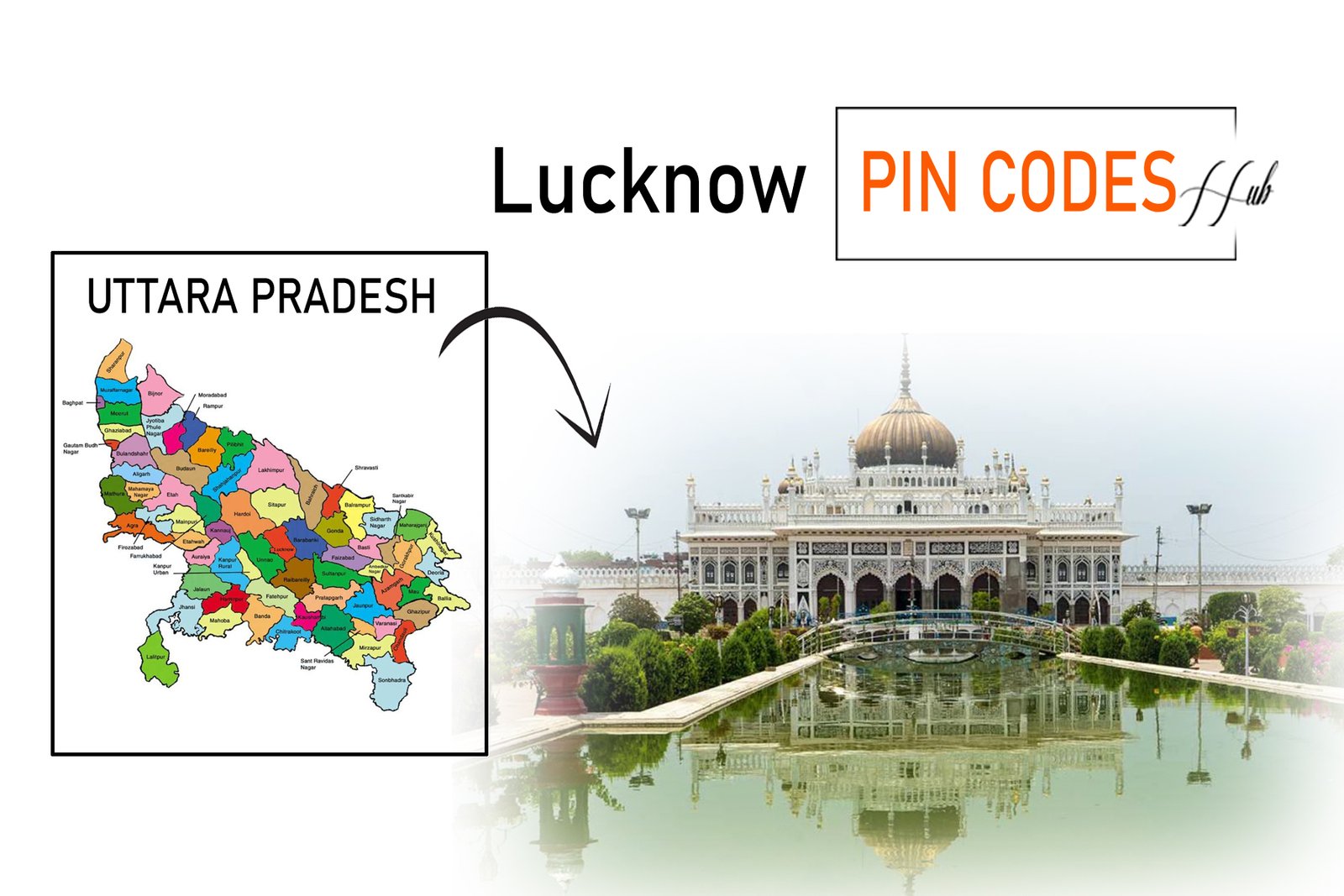
Introduction
Lucknow, the capital of Uttar Pradesh, is a city that carries its rich history with elegance while steadily adapting to modern life. It doesn’t rush like major metropolitan cities, yet it never stands still. There is a rhythm to life here—calm, familiar, and constantly moving forward.
Mornings in Lucknow begin quietly. Streets are less crowded, tea stalls welcome regular visitors, and people step out for walks or daily routines. As the day progresses, markets open, offices become active, and traffic increases. Even in its busiest moments, the city maintains a sense of balance.
Behind this smooth flow of daily life, there is a system working silently—the PIN code system.
At first glance, it may seem like just six digits added to an address. But in a city like Lucknow, where historic neighborhoods, planned colonies, and rapidly growing outskirts exist together, these six digits bring structure, clarity, and reliability to communication and delivery systems.
What is a PIN Code?
A PIN Code (Postal Index Number) is a six-digit code used by India Post to identify specific locations across the country. It was introduced in 1972 to simplify mail delivery and eliminate confusion.
Before the PIN system, postal services faced several issues:
- Similar place names across different regions
- Incomplete or unclear addresses
- Difficulty reading handwritten details
PIN codes solved these problems by assigning a unique number to every post office.
In Lucknow, most PIN codes begin with 226, placing it in the northern postal region of India.

Structure of Lucknow PIN Codes
Each digit in a PIN code has a specific meaning:
- First digit (2): Northern region
- Second digit (2): Sub-region
- Third digit (6): Sorting district (Lucknow)
- Last three digits: Specific post office
For example:
226001
- 2 → North India
- 2 → Uttar Pradesh sub-region
- 6 → Lucknow sorting district
- 001 → Head post office
This structured system works like a map, guiding letters and parcels step-by-step to their correct destination.
Lucknow District PIN Code Table
Below is a simplified table of important PIN codes in Lucknow:
| S.No | Area / Location | PIN Code |
|---|---|---|
| 1 | Lucknow GPO | 226001 |
| 2 | Aliganj | 226024 |
| 3 | Indira Nagar | 226016 |
| 4 | Gomti Nagar | 226010 |
| 5 | Hazratganj | 226001 |
| 6 | Chowk | 226003 |
| 7 | Aminabad | 226018 |
| 8 | Mahanagar | 226006 |
| 9 | Vikas Nagar | 226022 |
| 10 | Charbagh | 226004 |
Note: Some nearby areas may share the same PIN code if served by the same post office.
Importance of PIN Codes in Lucknow
PIN codes play a crucial role in keeping the city organized and connected.
1. Accurate Delivery
They ensure that letters and parcels reach the correct location, even in areas with similar names.
2. Faster Sorting
Postal systems use PIN codes to sort mail quickly and efficiently.
3. Reducing Errors
Even if part of an address is unclear, the PIN code helps guide delivery correctly.
4. Managing Urban Growth
As Lucknow expands, PIN codes help organize new residential and commercial areas.
5. Connecting Rural Areas
PIN codes link nearby villages and outskirts to the city’s postal network.
Uses of PIN Codes in Daily Life
In Lucknow, PIN codes are part of everyday life, often used without much thought.
Online Shopping
E-commerce platforms rely on PIN codes to:
- Check delivery availability
- Estimate delivery time
- Assign courier services
Banking Services
Banks use PIN codes for:
- Address verification
- Sending debit/credit cards
- Delivering important documents
Government Services
PIN codes are required for:
- Aadhaar updates
- Voter ID delivery
- Government schemes
Education
Students depend on PIN codes for:
- Admit cards
- Certificates
- University communication
Emergency Services
PIN codes help authorities identify locations quickly during emergencies.
Lucknow’s Geography and Postal System
Lucknow is a city of contrasts:
- Old areas like Chowk and Aminabad with narrow lanes
- Planned colonies like Indira Nagar and Gomti Nagar
- Expanding outskirts with new housing developments
In older areas, addresses often rely on landmarks such as:
- Near a mosque
- Behind a market
- Close to a known building
In newer areas, addresses are structured with house numbers and road names.
This mix makes PIN codes essential for maintaining clarity.
Challenges in Lucknow’s Postal System
Despite a strong system, some challenges exist:
Rapid Urban Growth
New colonies are developing quickly, requiring updates in postal mapping.
Address Variations
Some people use landmarks, while others use structured addresses.
Traffic and Weather
Congestion and seasonal conditions can slow down deliveries.
Even with these challenges, the system continues to function effectively.
FAQs About Lucknow PIN Codes
1. Why do Lucknow PIN codes start with 226?
Because Lucknow falls under the northern postal zone assigned this series.
2. Can multiple areas share the same PIN code?
Yes, nearby areas served by the same post office may share a PIN code.
3. What happens if I use the wrong PIN code?
Your delivery may be delayed or sent to the wrong location.
4. Are PIN codes required for online shopping?
Yes, they are necessary for processing and delivering orders.
5. Do villages have separate PIN codes?
Some do, while others share codes with nearby post offices.
6. Can PIN codes change?
They usually remain stable but may change when new post offices are added.
7. Do courier companies use the same PIN codes?
Yes, they follow the official India Post system.
8. How do postal workers find unclear addresses?
They rely on local knowledge and landmarks.
Conclusion
Lucknow is a city that beautifully balances tradition and modern growth. It carries its heritage forward while adapting to changing times. Behind this balance is a system that keeps everything connected—the PIN code system.
From letters and parcels to banking and government services, these six digits ensure that everything reaches the right place.
In the end, PIN codes are more than just numbers. They represent structure, reliability, and connection. In a city like Lucknow, they quietly support everyday life—making sure that communication flows smoothly and efficiently.